BACK TO TOP

Glan Lash opencast expansion - overview

Coal greed

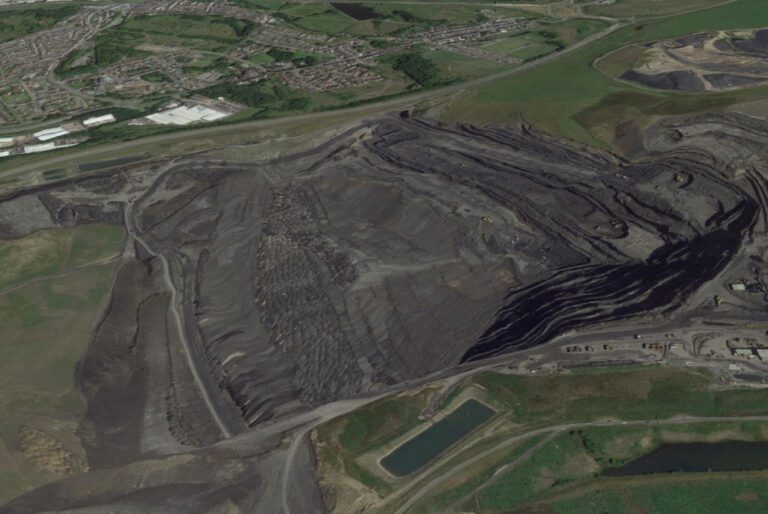
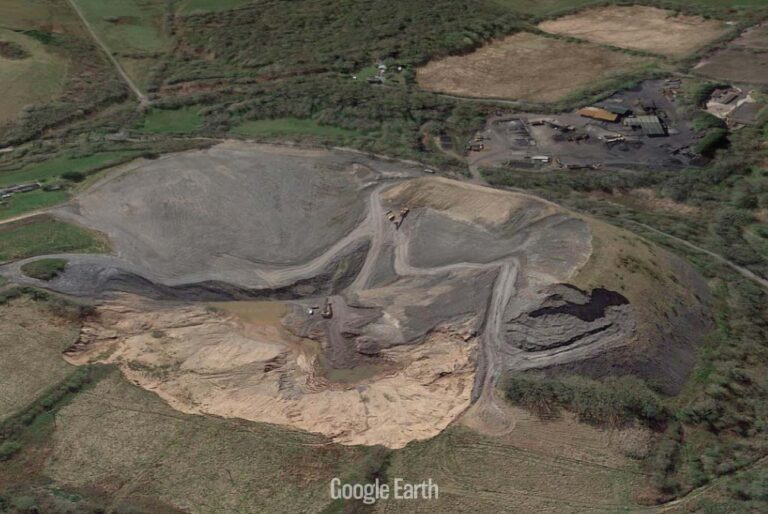
Bryn Bach Coal Ltd submitted an application in 2019 to expand the existing Glan Lash opencast coal mine by 6.68 hectares (originally 7.98 hectares) with the site boundary at 10.03 hectares. The coal operator wants to extract a further 95,038 tonnes of coal (originally 110,000 tonnes, and represents more than the original coal mine licenced for just 92,500 tonnes) over 6.1 years (planning ref. E/39917). This amounts to around 325 tonnes/week. The Standard Mineral Application Form submitted to Carmarthenshire County Council is only partially filled out. There is a pending call-in request (from 03/01/2020) to the Welsh Ministers to determine this application. It could be quashed by Ministers (as of 27/07/2022, the Welsh Ministers are waiting on the Local Planning Authority Officer's report).

There are many calls to reject the proposed expansion on the grounds of climate change, citing Planning Policy Wales (Edition 10). But Llandybie Community Council and Councillor Davies support it—citing jobs, community fund, and repeating the company’s claims of low climate change impact.

5-year delay to restoration, communities always pay the price

Based on the planning permission issued on 25 January 2012, coal mining was to cease by the end of 2016 and progressively restored, with completed restoration by the end of December 2017, followed by a 5-year aftercare period. However, as so often happens, this promised restoration has yet to even be started. Bryn Bach Coal Ltd submitted a Section 73 time-extension application to delay restoration works, which the Council permitted ahead of the coal operator submitted an application to extend mining. As a consequence, the local community has suffered an unrestored coal mine on their doorsteps for almost 5 years whilst the mining extension application is considered. To add insult to this injury, Bryn Bach Coal Ltd also write in their environmental impact assessment (EIA) that the extension applied for would “enable the full restoration of the existing and the proposed extension”, making the completion of the previously promised restoration now appear dependent on profits from the extension—not dissimilar from the narrative in Celtic Energy Ltd’s extension applications.

Coal operator's claims grow by the day

Bryn Bach Coal Ltd claim Glan Lash produces ‘premium quality anthracite’, without parallel in South Wales—a suspiciously similar claim is also made by EnergyBuild Ltd about their Aberpergwm deep coal mine in South Wales.

Despite admitting that 50% (which the company recently changed to 25% in 2022, without explanation or evidence) of the coal mined would be burned for domestic heating, and failing to account for what percentage is destined for other uses, Bryn Bach Coal Ltd haughtily claim in their EIA “that to refuse planning permission based on the impact our proposal will have on Climate Change and Carbon Emissions would be globally irresponsible.”

Bryn Bach Coal Ltd does not determine global coal market conditions and cannot predict demand of different industries. Ultimately, the company will sell to whoever wants the coal and is offering the highest price for it. There will be nothing in the planning permission that controls how the coal is consumed. Bryn Bach Coal Ltd's claims around this may well just be an attempt to make the mine seem more acceptable to Planning Councillors and the public - don't fall for it.

See our key facts and figures on the Glan Lash expansion proposal

Independent Planning Ecology report recommends rejection in July 2022

Council commissioned the independent reviews of the technical reports paid for, and submitted by, Bryn Bach Coal Ltd on how the coal mine extension would impact water flows (hydrology) and the ecology reliant on that in the area. An independent Planning Ecology report in July 2022 recommends rejection of the application to fulfil the Council’s duty to “maintain and enhance biodiversity under Section 6 of the Environment (Wales) Act 2016, Section 6.4.21 of Planning Policy Wales or under Well-being Goal Two of the Well-being and Future Generations Act 2015 (AResilient Wales)”, and points out “documentation provided by the applicant is misleading in places as it makes frequent reference to the restoration of habitats”. In a letter to the Council, Friends of the Earth Cymru precede this independent Ecology Planning report’s conclusions by pointing out that “While mitigation is proposed in the form of restoration and replanting, these trees and associated landscape proposals will take years to grow back to current levels, and existing habitats may not recover”.

The 2018 EIA report paid for by the coal operator, Bryn Bach Coal Ltd, identifies that ancient woodland extends 2.52 hectares inside the site boundary, which would be at risk if the extension goes ahead, but claim the woodland should not be categorised as ancient woodland. The ecologists refute the 2011 classification by Countryside Council for Wales and Forestry Commission Wales, by citing a more obscure historic 1988 source that does not list it as ‘ancient woodland’. In a more recent EIA report by Pryce Ecologists, they stopped using the downgraded term ‘historic woodland’ and stuck to the correct ‘ancient woodland’ classification. This is reinforced by the July 2022 independent Planning Ecology report citing the woodland to be “circa 120 years old” and “cannot be compensated for by the creation of new woodland within a 17-year timeframe”. This is in direct contraction to what was claimed by the Pryce Ecologists EIA report paid for by Bryn Bach Coal Ltd. The independent report goes on to say it would take 120 years for the newly planted woodland to support the same biodiversity, by which time the existing woodland would be 240 years old if it wasn’t removed, and therefore probably still ahead in biodiversity. The independent report is also critical of the 2018 EIA report as ‘The applicant has incorrectly assessed that none of the hedgerows on the site are “important”’, arguing the loss of these hedgerows should be a ‘material consideration when considering this planning application’, particularly as the restoration plan’s “amount of new hedgerow planting is well below the 2:1 ratio associated with habitat compensation and habitat loss” and “40-50% of this planting is in positions where it will contribute little to biodiversity”.

Independent hydrology report lambasts company research as 'unsafe'

The independent hydrology review commissioned by Council is highly critical of the reports provided by Bryn Bach Coal Ltd, with specific criticisms like “it is my very strong opinion that the information provided is insufficient”, “here appears to have been a complete absence of research on the hydrological management of abandoned mine workings in the area”, and “unsafe assumption[s]”, “I disagree entirely with this statement, and find it hard to understand how the reported data collection exercise could have informed the understanding of whether the marshy grassland is groundwater-dependent to any degree”. Lambasting one of the most recent hydrology reports by Humphries and Leverton in 2022 (again commissioned by Bryn Bach Coal Ltd), the independent review claims “it is based on a wholly inadequate ecohydrological conceptual model, the central limitation being an extremely poor understanding of the hydrogeology of the area … I am strongly of the opinion that the information provided is not sufficient to enable the Local Authority to determine whether or not the proposals will cause significant ecohydrological impacts”. In relation to the restoration plan, the review highlights that the “current claim that sequential backfilling of mined areas will completely restore the original hydrology as the workings move from west to east is, in my opinion, unsafe.”

Neil Bateman - coal mine is against national policies

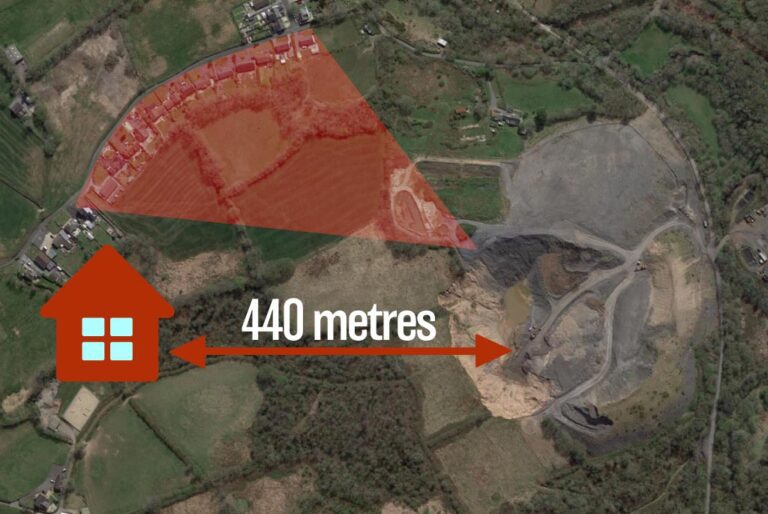
As a statutory consultant, Neil Bateman responded to the extension application by pointing out that the Planning Policy Wales 10 (para. 5.10.14-15) applies in this case: “Proposals for opencast, deep-mine development or colliery spoil disposal should not be permitted…” (although acknowledging there is ambiguity about whether this applies extensions or only new coal mines). Bateman also highlights that the Minerals Technical Advice Note 2, para. 29 states “coal working will generally not be acceptable within 500 metres (m) of settlements”. The nearest settlement to the extension would be 440 metres, 60 metres less than the stipulation in this policy.

Published: 17/08/2022

Key facts: Glan Lash opencast coal mine expansion

Bryn Bach Coal Ltd is the coal mining company that operates the Glan Lash opencast coal mine, which has been dormant since planning permission expired in 2019. In 2018, it applied for an extension which was unanimously rejected by planning councillors in 2023. Undeterred, Bryn Bach Coal Ltd is trying again! This time with a slightly smaller extension of some 85,000 tonnes rather than 95,000 tonnes. Check out the company's application and public responses so far.


Key facts & figures (2024)

Coal to be sold: 85,000 tonnes in total – average of 328 tonnes per week

CO2: Approximately 271,000 tonnes of CO2 in total (2024 BEIS Conversion Factors)

Methane: ~659 tonnes in total -  circa108 tonnes each year.

Coal operator: Bryn Bach Coal Ltd – since grant of planning permission January 2012 - 2019

Type: Anthracite coal

Mining method: Opencast

Purported destination: Brake pads, water filtration, brick colourant etc.

Local Planning Authority: Carmarthenshire County Council

Address: Glan Lash Mine Site, Shands Road, Llandybie, Blaenau, Carmarthenshire SA18 3NA

Physical size: 10.03 hectares, with a void of 5.92 hectares (extended void = roughly 11 football pitches)

Time: 5.4 years of coal extraction, 7 years of all works on the site

Published: 15/10/2024

Help us to stop the Whitehaven coal mine proposal by writing to your MP

Updated. The decision to stop or allow the proposed 61.4 million tonne coal mine has been delayed or a second time. It is now due on or before the 8th November. (Following a first delay when the Government had said the 17th August.) We are keen to apply as much pressure to stop the mine as possible. For why this mine cannot be allowed to go ahead, see our blog post Key facts: Whitehaven coal mine.

The public inquiry into the application closed nearly a year ago (September 2021). Now we’re contending with the invasion of Ukraine, a looming energy crisis, and the closure of Port Talbot steelworks if it doesn’t receive £1.5 billion in subsidies from the government to pay for new equipment to remove its dependence on coal.

Since Liz Truss became Prime Minister there is a new Minister, Simon Clarke responsible for this decision. He is the third new holder of this role since Robert Jenrick said the government would take over the proposed Whitehaven coal mine decision in March 2021 from Cumbria County Council.

Write to your MP now to ask that they make Simon Clarke, the Secretary of State responsible for the decision, aware of your concerns.

Find out who is the MP for your area.

Below are some suggestions of points to include, please re-write them yourself and or change their order. Unique letters make a much bigger difference than reproducing the same one.

Some things to consider in your letter to your MP:

1) The only significant domestic demand for Whitehaven’s coal would be Port Talbot Steelworks (at most, 13% of the coal produced could be consumed in the UK at full production). Port Talbot Steelworks has announced it will either cut out coal from its steelworks with a £1.5 billion government subsidy – or close. Either way, close to 100% of Whitehaven coal would be exported where it doesn’t get included in UK emissions statistics, but does worsen everyone’s climate risk.

2) The invasion of Ukraine by Russia is a good reason to lead the way in reducing our industries’ dependence on fossil fuels, starting with Port Talbot Steelworks, and embrace the massive potential for renewable energy across the UK. Much can be done just by increasing efficiencies, see our report on Coal in steel.

3) Chris McDonald of the Materials Processing Institute has said that the Whitehaven mine would not displace a single tonne of Russian coking coal from the UK. The industry’s trade association—UK Steel - has confirmed that no Russian coal is used in UK steelworks any more; these plants have already found alternative sources.

4) The UK holds the COP (climate summit) presidency until the end of 2022, the UK needs to set an example by keeping all fossil fuels in the ground. Lord Deben, of the Climate Change Committee, said in June 2022 "As far as the coal mine in Cumbria is concerned, let's be absolutely clear, it is absolutely indefensible".

5) The cost of living crisis means that we need to invest in technology and industries which can offer sustainable, well paid, long-term employment, building a greener country—rather than investing in a declining industry at a coal mine with an uncertain future. The Local Government Association, says there is potential for over 6000 green jobs in Cumbria this decade of which 10% of these could be in Copeland, where the Whitehaven coal mine would be.

You can also include reasons against this coal mine which are not on this list, but important to you. Remember it would produce coal for steel making, rather than for coal power stations. Please remember to include a full name and address.

Particularly important Ministers to contact are: Alok Sharma, Reading West; Simon Clarke, Middlesborough South and East Cleveland; Kwasi Kwarteng, Spelthorne; Greg Hands, Chelsea and Fulham; Paul Scully, Sutton & Cheam; Marcus Jones, Nuneaton; Lia Nici, Great Grimsby; Steve Double, St Austell and Newquay; and Alan Mak, Havant, Hampshire. However, only the MP for the area that you live will correspond with you on this issue.

If they haven't already you could ask your MP to sign the Early Day Motion titled, “Planned coalmine in Whitehaven, Cumbria”. 51 MPs have signed so far.  Is yours one of them? Normally only opposition party MPs sign EDMs.


Coal extraction - call for evidence

Consultation question: Considering the information presented in this call for evidence paper, and your own knowledge and experience, what are your views on the extraction of coal in Scotland?

Our response: The Welsh Government's most recent policy statement on coal should provide a starting point for the Scottish Government to build upon (https://gov.wales/coal-policy-statement-html) in developing its own policy, as there are clear and relevant parallels between both Governments.

Both Wales and Scotland has a long legacy of suffering the localised impacts of environmental blight and hazardous conditions of coal mining, with nearby communities rarely seeing a significant share of the economic benefits. Wales is still littered with unrestored or poorly restored coal mines. It was reported that only this year are the final abandoned coal mines in Scotland being restored - again, often to revised, lower standards that what was promised nearby communities due to insufficient restoration bonds.

Now more is known about climate change, both Wales and Scotland have led the way in developing progressive policies and practice to realise their ambitious targets. This cannot include viably include coal, which is worse in CO2 emissions than natural gas and oil in its conversion factor to energy. The EIA Pathways to Net-Zero report make this very clear, underscoring that no new coal mining for any purpose can be part of a pathway to Net-Zero by 2050.

A critical part of that report is no new coal mining for any purpose. The report goes further to explicitly include coking coal for steel in this prohibition. Port Talbot Steelworks in South Wales and British Steel in England are the 2nd and 3rd largest single-site sources of CO2 in the UK - because they burn coal. Any policy that differentiates between the extraction of coal for energy production and coal for steel production, ignores this growing threat to meeting climate targets across the world. It would also ignore the rapidly escalating developments around the world in decarbonising the steel industry. Green steel is on its way, with the first delivery of commercial quantities made from Sweden in 2021. Unfortunately, once investors have opened a coal mine, they will seek return on that investment and find alternative markets for the coal, or laggard steelworks that still rely on coal in the future. So permitting new coal mining for steel will prop up the biggest polluters and discourage transition to new technology and practices.

There is no viable future for any of us that relies on coal to get us there. Scotland should be using its just transition fund to skill its inhabitants in the industries of the future, not ploughing people into the industries that destroy that future.

Published 03.08.22

Key facts: Whitehaven coal mine

West Cumbria Mining Ltd want to extract 2.78 million tonnes of coking coal annually, right up to 2049.

Cumbria County Council approved the application; but campaigning, including a 114,000+ signature Coal Action Network petition, led government to make the decision itself and call a public inquiry. Subsequently the government approved the mine in December 2022, but the decision is subject to legal challenges. Work has not started and financing is not in place.

Key facts & figures

Coal & refuse to be excavated: 67 million tonnes in total - almost 3 million tonnes per annum (at full production) - WCM Planning Statement, Sep 2021

Coal to be sold: 64 million tonnes of coal in total - 2.78 million tonnes of coal per annum (at full production) - WCM Planning Statement, Sep 2021

CO2: Approximately 200 million tonnes of CO2 in total - 8.8 million tonnes of CO2 per annum at full production (2022 BEIS Conversion Factors)

Methane: 340,000 tonnes of methane which is 34 million tonnes CO2 equivalent (not included in the figures above) - 15,000 tonnes of methane per annum at full production (mid-range estimate, measured over 20 years, Global Energy Monitor's Global Coal Mine Tracker)

Coal operator: West Cumbria Mining (Holdings) Limited, which is 82% owned by EMR Capital Investment Limited (No. 3B PTE Ltd) registered in Singapore.

Type: Coking (metallurgical) coal

Claimed destination: primarily burned in steelworks in the UK and Europe

Local Planning Authority: Cumbria County Council

Address: from the former Marchon site, Pow Beck Valley, to St. Bees Coast, Whitehaven, West Cumbria

Physical size: principal seams to be worked would be the Bannock Band and Main Band, which are at a depth of approximately 350 metres over 23ha

Time: applying for planning permission from 2022-2049

Published: 03/08/2022

Lochinvar proposal - a licence to harm

Update - Sat 15th October 2022 the Scottish Government De Facto banned coal mining. As such this article is for historic interest only, this is not a live campaign.

New Age Exploration Ltd (NAE Ltd) proposes to extract up to 33.7 million tonnes of coking coal for steelworks in the UK and beyond between 2025 and 2051 from a mine under Gretna and Canonbie, near Carlisle, in South West Scotland. This may worsen local air quality, reduce the value of nearby residential properties, make local roads more dangerous with HGV traffic, and will emit around 73 million tonnes of CO2 and around 750 thousand tonnes of methane, a powerful climate change accelerant.

NAE Ltd has a conditional licence from The Coal Authority and aims to secure full planning permission by 2023-4.

Impacts

Local impacts

  • NAE Ltd are considering a method of deep coal mining that can lead to surface level collapse and disruption of watercourses.
  • Local roads will see a sharp increase in heavy goods vehicles (HGVs) relied on for mine construction and remediation, and likely throughout for some coal and materials transport.
  • Air pollution is created by mining that can be blown into surrounding residential areas.
  • Property value may be impacted by nearby underground mining works.

Global impacts

  • This coal mine will emit a total of around 73 million tonnes of CO2 and around 750 thousand tonnes of methane (3.04 million tonnes of CO2 and 31,000 tonnes methane every year).
    • In terms of the methane alone (a powerful climate accelerant), that’s roughly equivalent to 2 gas plants operating year round, or a year's emissions from 150,000-178,000 cars - Global Energy Monitor.

Key facts and figures (2020)

  • Coal to be extracted: 47.3 million tonnes (13.6 million tonnes of which would be non-target coal extracted in the process and put back underground after), at a rate of 1.9 million tonnes per annum, including non-target coal.
  • Coal to be sold: NAE Ltd estimate a total of 33.7 million tonnes of coal will be extracted and sold - 1.4 million tonnes of coking coal per annum
  • CO2: 100 million tonnes (total)
  • Methane: 750 thousand tonnes (total - GEM)
  • Intended market: UK and Europe.
  • Type of target coal: High-volatile coking coal.
  • Current land use: Primarily dairy cow farming.
  • Envisaged deep mining method: Originally longwall mining, but Bord and Pillar underground mining is now under consideration.
  • Area: 185 km2 covered by 3 conditional licences (Lochinvar North, Central, and South)
  • Anticipated cost: £18 million to secure a full licence for the proposed coal mine over 4 years.
  • Coal quantity: Borehole analysis estimate 49 million tonnes, with a further 62 million tonnes inferred. In total: 111 million tonnes of coal.
  • Time span: 26 years.
  • Coal transport: By rail via the West Coast Main Line for direct delivery to either UK steel mills, or to the port of Hunterston or port of Blyth for shipping into Europe.
  • Relevant Councils: Dumfries and Galloway Council, and Cumbria County Council.

(Company-supplied in the application for a conditional licence to The Coal Authority in 2020. Redacted by The Coal Authority)

Intriguing…

Eyes and ears on the ground: ‘Lochinvar Coal Limited’ employs someone in the role of ‘community-liaison’ based in the town of Canonbie.

Dirty coal: NAE Ltd’s target sulphur content is 1.2-1.4% whereas current imports from USA are less than 1.2%, with some as low as 0.9%. The higher sulphur content of coking coal from the proposed coal mine in West Cumbria recently led an industry leader to rule out its use in UK and European steelworks.

Rolling the dice: based on a Wood Mackenzie forecast of European demand for imported coking coal to grow over 50% from 2017 to 2035. Recently, serious flaws in Wood Mackenzie forecasts were revealed in a public inquiry into the proposed Whitehaven coal mine—as it fails to properly consider rapidly increasing momentum behind green steel.

Best corporate quote: “Investor confidence is then expected to slowly return, making it possible to again raise larger amounts of funding required to progress quality coking coal projects, notwithstanding growing climate change related general anti-coal sentiment globally.” (Licence application to the Coal Authority, 2020)

Shaking the money tin: NAE Ltd claims it is currently progressing discussions for direct investment from potential investors, but its existing relationships have been redacted from the licence application.

Timeline

2012: New Age Exploration Limited (NAE Ltd) acquired the Lochinvar licence. NAE Ltd set up Lochinvar Coal Limited (formerly Canonbie Coal Limited) in 2012 to operate the Lochinvar Coking Coal Project. However, NAE Ltd remains its parent company, and holds the exploration and conditional licences directly.

2013: NAE Ltd drilled 10 deep boreholes to a total of 3,752 metres underground, through its subsidiary, Lochinvar Coal Limited, on the Scottish/English border near the town of Canonbie, to estimate coking coal quantities and access . This follows drilling by The National Coal Board, British Geological Survey, and Greenpark Energy between 1979 and 2009.

2014: NAE Ltd conducted a scoping study, subsequently updated in 2017.

2014-2016: Coal prices fall to historic lows of USD$70/tonne and NAE Ltd put the project on hold as it was unable to raise funding. Prices remained volatile up to 2019, reducing investor confidence.

2019: NAE Ltd conducted a “Project optimisation study” and touted for partners or investors to finance the development of a coal mine—then the UK and many countries went into lockdown as the pandemic was responded to.

2020: NAE Ltd paid a £13,800 application fee to the coal authority for a coal mining and exploration conditional licence.

2021: JHD Exploration Ltd Dumfries and Galloway Council (within which the Lochinvar test-drilling took place received) for the first time since 2013 to notify them of test drilling.

2022: NAE Ltd had its conditional underground licence renewed by the Coal Authority on 21 January 2022—just 4 days before issuing the Aberpergwm coal mine expansion, in Wales, a full licence. This occurred in a changed context of increases in the price of coal through 2021-22, sanctions on Russian coal has driven demand for alternative sources, production has ramped up post-lockdowns, and the UK Government is broadcasting a more favourable approach towards new coal projects again.

Going forward...

2023-2024: Between 2023 and early 2024 NAE Ltd aim to secure planning permission.

2025: Towards the end of 2025, NAE Ltd aim to begin extracting coal.

About NAE Ltd

NAE Ltd is the named coal mine operator for the Coal Authority's Lochinvar conditional licence. NAE Ltd is a reasonably small company Australian-based mining company, listed on the Australian Stock Exchange.

Dealings in the UK and elsewhere: NAE are a NAE Ltd previously operated the Redmoor Tin-Tungsten mine in Cornwall under Cornwall Resources Limited, in a joint-venture with Strategic Mineral PLC. NAE Ltd is also advancing gold exploration projects in Australia and New Zealand, and previously (dates) advanced thermal and coking coal exploration projects in Colombia.

Financial turmoil? NAE Ltd's shares have tumbled by over 46% on the Australian Stock Exchange over the past year, and have been erratic over the past 3 years - decline is clear though over the past 6 months.

Is NAE Ltd actually a mining company? From its size, current portfolio, and the sale of its share in the Redmoor Tin-Tungsten mine in the development stage, it appears NAE Ltd is focused on exploration and development rather than long-term mine-operation. Two of the 3 Directors of NAE Ltd have backgrounds in raising capital and equity capital, further signalling the company’s business model.

This means NAE Ltd may look to sell the Lochinvar coal mine to another operator early or at some point during its development. The company that buys the coal mine licence will not be subject to the same financial and competence tests that NAE Ltd has been, raising concerns about how the coal mine will actually be operated.

While NAE Ltd has yet to apply for full planning permission, the preparation for an application is underway.

Outreach

Download a PDF of our leaflet on Lochinvar

Off to the Scottish Climate Camp!

Published: 18/07/2022

UK Government’s consultation on the Energy Capacity Market

In response to the "Technical Amendments to Improve Auction Liquidity".

Coal Action Network is concerned by the content of the proposals:

  • Postponement of the introduction of the statutory requirement for independent verification of fossil fuel emissions
  • Amendments to arrangements on mothballed plant to remove a barrier to prequalification for mothballed plants that would otherwise prevent their prequalification for the 2023 CM auctions.

The independent verification of applicants’ fossil fuel emissions was to be introduced to improve the reliability of this important information, and give confidence to the data reported by companies given access to the UK energy generation market. The postponement of this introduction therefore lengthens the doubts cast over the claims made by applicants to the capacity market. The Government claims the reason for the postponement is that there may not be enough independent verifiers in time for applicants to meet this condition. This is a failure in preparation on the part of the UK Government, to rigorously implement the climate policy it created and meet its own targets. We would expect this to be resolved well before the next capacity market auction as non-independent accounting for carbon emissions cannot become normalised or it will risk under-representation of the emissions of the CMUs and the UK overall.

The amendment to allow mothballed plants to bid in the upcoming capacity market auction is concerning where it may increase the potential for recently mothballed coal power plants to come back online and result in a higher proportion of coal within the UK energy mix 2023-24, until the 2024 coal phase-out date begins to have effect. We categorically oppose any move that slows down or reverses the declining use of coal for power in the UK­—including the recent announcement by BEIS to delay the scheduled closure of West Burton coal fired power station. The UK Government states that it is necessary to allow mothballed power stations to participate in the upcoming capacity market auction to increase competition, which it hopes will reduce the cost of electricity generation—particularly when there are greater demands on the grid, such as during the winter months.

If the UK Government invested in renewable technology development and deployment to the same extent that it historically subsidised the fossil fuel industry, competition might realistically be fulfilled by renewable power generators instead. The current challenges are due, to an extent, the policy failure of this government and successive governments to put glib speeches on climate change into action. Moving forward, we urge the UK Government to avert this energy generation challenge recurring with a package of climate-friendly measures, including:

  • the application of a windfall tax on the record profits of some of the largest energy company operations in the UK, and ringfence spending to renewable energy generation and efficiency measures.
  • make mandatory that all new residential developments meet stringent energy efficiency standards to reduce the winter demand for household heating, as well as bills.
  • increase the roll-out of retrospective insulation for Housing Association and Council Housing tenants, reducing the energy bills for those least able to pay them and reducing demand during winter months on the grid.
  • Support the development of community owned, localised smart-grids to reduce reliance on a small group of large centralised energy generators and power stations.

We are concerned that the 2024 coal phase-out date is being used by the UK Government to deflect criticism for its support of using coal up until that date, when what we need is the most rapid phase-out of coal that is possible as the UK careers further from its climate targets. This attitude has been captured in comments made this year by two leading cabinet Ministers, “Net zero is by 2050. We are not at 2050 yet.” – Jacob Rees-Mog, and “Give over. We’re still committed to phase out by Sept 2024.” – Kwasi Kwarteng (in relation to extending the coal powered operations at West Burton).

Finally, as we have commented before in previous consultations, the 2024 phase-out date should be legislated on, to ensure that it happens. As this consultation and other recent moves by this government show, this or any future administration is not currently prevented from taking steps which cast doubt on or undermine that commitment.

Published 28.06.22

Organisations working against the proposed West Cumbrian coal mine

There are a range of organisations fighting against this disastrous proposal, each with different tactics and strategy, but working together to stop the mine. We encourage you to look at their information and get in touch direct if you'd like to work with them.

South Lakes Action on Climate Change (SLACC) is a community-based charity which brings together people who want to do something about climate change and promote a more sustainable lifestyle. SLACC is currently running a legal challenge against the Government's approval of the proposed mine.

Friends of the Earth is a grassroots environmental campaigning community. From campaigners and lawyers to local action groups and supporters across the country, it pushes for change for people and planet. Friends of the Earth is currently running a legal challenge against the Government's approval of the proposed mine.

Extinction Rebellion North Lakes and Extinction Rebellion South Lakes are active on this issue across Cumbria and bring together people in opposition to the mine at a local and national level.

Campaign Against Climate Change believes in the power of street protests, big and small, in working in coalitions as part of a wider movement and in making the links between climate change and other social justice issues. They have a trade union group and produced the report Climate Jobs: Building a workforce for the climate emergency

Left Unity is active in movements and campaigns across the left, working to create an alternative to the main political parties. The Cumbria and North Lancaster group is involved in protests against the proposal.

BankTrack is the international tracking, campaigning and civil society support organisation targeting private sector commercial banks (‘banks') and the activities they finance. Bank Track has written this brilliant profile on the proposal

Reclaim Finance is a research and campaigning organization that is looking at the funding of the proposal.

Cumbria Action for Sustainability undertakes practical projects with communities and organisations of all kinds to encourage the transition from high to low carbon lives and livelihoods. It has produced research on the potential in Cumbria for jobs which would contribute to decarbonisation as an alternative to the coal mine.

And of course there are local people against the proposal, non-affiliated individuals and local representatives of organisation such as the Green Party, trade unions etc.


Campaign to stop Aberpergwm - the story so far

Discovery

At the end of November 2021, we noticed the licence application for an extension to 'Aberpergwm Colliery' in South Wales on the little-publicised webpage of the Coal Authority (regulator for all coal mining across the UK). This webpage contains a listing of all coal mine licences and licence applications and is a good one to bookmark and check back regularly.

We noticed the application was made in 16/09/2020, so we knew it could be awarded a licence tomorrow or in a year's time. But after checking no other group was campaigning on this already, we sprung into action to ensure licencing wasn't just waved through. In early December we started raising awareness of the licence application over social media, and shared key facts about the coal mine.

Governments deny responsibility

We spoke with Minister Lee Waters of the Welsh Government who insisted the his Government cannot use their powers under the Wales Act 2017 to stop the Aberpergwm coal mine expansion - since the licence's origins dates back before the Wales Act 2017 came into force. Therefore, it was for the UK Government to stop this licence. But the UK Government publicly disagreed in a BBC article on November 4th, arguing that the Welsh Government can apply the Wales Act 2017, and for that reason it would not be appropriate for the UK Government to step in.

In short, both the Welsh and UK Governments pointed the finger of blame at each other and neither would take responsibility nor resolve the issue between them, which actually had the power to intervene.

Mass email action

Coal Action Network launched a mass email campaign on 20/12/2021, encouraging our supporters and the public to contact Ministers Lee Waters of the Welsh Government, and Michael Gove of the UK Government. By the end of December, over 4000 emails had been sent to both Ministers, asking them to agree which government has the power to stop the Aberpergwm coal mine expansion - and to step in to stop the licence.

Both Minister failed to respond to any of the 4000 emails, ignoring the thousands of concerns expressed to them.

Open letter to Welsh & UK Governments

After both Ministers Lee Waters and Michael Gove failed to respond to any of the 4000 emails, and ignore the thousands of concerns expressed to them, Coal Action Network followed with an open letter to them. This letter summarised the main concerns that our supporters and the public wrote to them with, and asked for a response to these concerns.

Again, both Ministers failed to respond and we were getting increasingly concerned their inaction and refusal to communicate would let this licence application slip through and commit us all to continued coal mining at Aberpergwm until 2039.

42m more tonnes of coal gets licenced

On  25th January 2022, the Coal Authority awarded Aberpergwm its coal mine expansion licence, quietly updating its listing of coal mining applications and licences. In response to an email from Coal Action Network, the Coal Authority claimed it could not refuse the licence on any grounds apart from a narrow criteria set by the 1994 Coal Industry Act. If an applicant meets this criteria, the Coal Authority claims it must grant it the licence.

Coal Action Network contacted Richard Buxton Solicitors to find out if there is still any hope of stopping this coal mine, and whether the Welsh Government can still intervene - as the UK Government claims it can.

CAN visits Aberpergwm & Glynneath town

In February 2022, CAN staff visited the site of the Aberpergwm coal mine and met with local people in Glynneath to deepen our understanding of local views and awareness of the looming coal mine expansion. We learned that people living in towns near to the coal mine felt reliant on the coal mine because it brought some business into an area struggling economically and with underfunded services such as public transport links between nearby towns. We have heard similar stories of other towns, forced by a lack of Government investment, to choose between a coal mine with HGV traffic, noise, and disruption, or further job losses and closures.

We also found only low levels of awareness that the coal mine was recently licenced for a massive expansion, indicating that coal mine operator, EnergyBuild Mining Ltd, had not communicated this with local people.

Welsh groups take action

Coal Action Network reached out to Wales-based environmental groups and engaged them on the issue of the impending Aberpergwm coal mine expansion licence. After speaking of 100 million tonnes of CO2 and up to 1.17 million tonnes of methane expected to be generated from this expansion, they took action.

Actions have included blockading the site office at the coal mine location on 11th March, and a theatrical noise demonstration outside the Senedd on 17th March 2022 which was attended by Wales Green Party leader Anthony Slaughter and Liberal Democrat party leader, Jane Dodds, who both delivered speeches on the need to prevent this coal mine expansion.

Legal challenge is launched

Richard Buxton Solicitors and Barrister Estelle Dehon (QC) represented Coal Action Network, believing there to be a case to argue:

  1. The Welsh Government can apply the Wales Act 2017 to the Aberpergwm coal mine expansion licence, meaning the licence won't be valid unless the Welsh Government formally approves it
  2. The Coal Authority can consider factors beyond the narrow criteria it claims it's limited to when deciding a licence application.

After 'pre-action letters' to the Welsh Government and UK Coal Authority, Coal Action Network's legal team submitted an application in early April for a judicial review on these grounds.

Crowdfunder for £65,000 legal and court fees

Coal Action Network is a small grassroots organisation, so we need to fundraise £65,000 to challenge the Welsh Government and Coal Authority in a judicial review. These funds are needed to pay for our legal costs, potentially a portion of the other side's if we lose, as well as court fees.

But, if we win, we would set a legal precedent that could make it significantly harder for future coal mining across the UK, potentially laying a 475 year industry to rest and helping to safeguard future generations.

Please share and donate to our CrowdJustice crowd funder.

Application for a full Judicial Review approved

Our legal team has been informed that our legal challenge will be heard by a senior High Court judge on 15th-16th March 2023. Permission to proceed to a full Judicial Review in the High Court indicates we have a solid case and puts us an important step closer to reversing January's decision to licence a 42 million tonne expansion of the Aberpergwm coal mine. Our crack legal team, Richard Buxton Solicitors and Barrister Estelle Dehon QC, will challenge the parts that The UK Coal Authority and the Welsh Government played in this disastrous licence slipping through.

Senedd (Welsh parliament) briefing

Coal Action Network held an informal briefing in the Senedd (Welsh Parliament) sponsored by Jane Dodds, Member of the Senedd (MS).

The event was attended by MSs and their staff who heard why the proposal to extend Aberpergwm coal mine should be stopped and how Universal Basic Income could answer some of the issues for workers during the transition to a low carbon economy.

Judicial Review hearing

On 15 March 2023, we arrived outside the Cardiff courts for the Judicial Review hearing, to press teams and a strong demonstration in support of our case for a more sustainable future in Wales and the UK. We feel confident that our legal team made convincing and consistent arguments rooted in the law. A decision should be made by the judge in 2 weeks to 3 month from today. Read more...

On 19th May 2023, the Judicial Review decision upheld the mine to continuing to operate until 2039 to the tune of over 100 million tonnes of CO2. This judgement comes fewer than two months after the IPCC released a report sounding the ‘final warning’ of irreversible and catastrophic climate change. Although ultimately the judge’s decision upholds the Aberpergwm coal mine in the midst of our climate crisis, the judgment agrees with our legal team on a number of crucial points, creating some optimism around a possible appeal. We'll need to weigh up time and funding with the chance of a successful outcome. Read more...

On the 19th of May, The Hon. Mrs Justice Steyn DBE decided in favour of the Welsh Government and Coal Authority, but granted us permission to appeal the decision about the Welsh Government less than 2 weeks later, on 31st May.

The grounds for this appeal are:

Read more...

End of the road

The High Court decided against Coal Action Network and found against our appeal in February 2024. The grounds were different to those given by the lower court.

Consequently Coal Action Network appealed to the Supreme Court. Sadly, in July 2024 the application to the Supreme Court was rejected.

This is the end of the road for the legal challenges against the coal mine extension, but we are working on other strategies to keep coal under the ground at Aberpergwm and elsewhere. Thanks for all your support in this campaign.

Published: 04.07.2024
Published: 25.04.2022

Key facts: Aberpergwm coal mine expansion

We'll keep this post up-to-date with the key facts so keep checking back!

Key facts


Coal & refuse to be excavated: 72 million tonnes in total - 30 million tonnes of which will be "middling" coal to be dumped or put back into the coal mine.

Coal to be sold: 42 million tonnes during the life of the extension

CO2: 100-120 million tonnes of CO2, according to uses listed below (2022 BEIS Conversion Factors)

Methane: up to 1.17 million tonnes of methane, a powerful climate accelerant

Coal operator (mining company): Energybuild Ltd/Energybuild Mining Ltd.

Type: Anthracite

Claimed uses:

  • 2022: According to Energybuild Ltd, 60% of the coal goes to steelworks, 20% domestic heating (80% overall), with the remaining to mixed industrial uses
  • 2023: Energybuild Ltd predicts, overall, 70% of the coal will go to steelworks and domestic heating (reduction of 10%), with the remaining to mixed industrial uses

The planning application said power stations and steel works. With Aberthaw power station closed, Energybuild now talks of Pulverised injection for steelmaking, household heating, cement, and water filtration.

County Council Local Planning Authority: Neath Port Talbot

Address: Glynneath, Neath, SA11 5AJ

Physical size: Because this is an underground mine, much of the excavation would be invisible but very real, as communities victim to flooding mine shafts have experienced. The underground tunnelling has permission to extend to 2.3km squared, taking you roughly half an hour to walk from one side of the tunnels to the other. And this doesn’t factor in the vertical shafts, sending offshoots that go beneath the River Dulais.

Time: Planning permission to mine coal until 2039 (this is often subsequently extended).

Published: 22/04/2022