BACK TO TOP

Flawed grounds of Michael Gove’s shock approval of the Whitehaven coal mine

Flawed grounds of Michael Gove’s shock approval of the Whitehaven coal mine

The UK Government has produced a 15 page letter plus appendices which outlines the reasons for granting permission to the Whitehaven coal mine application (Ref: 4/17/9007). This is mostly in the form of highlighting points on which Michael Gove agrees with the Planning Inspector , Stephen Normington, who also recommended granting permission for the application.

We have criticisms of each argument and are left wondering who’s interests really underpin Gove’s shock decision to approve the coal mine...

The arguments, and their problems

1) 'Demand for coking coal will continue in the UK and Europe’s steelworks until 2040 at least'

Tata steelworks in Port Talbot has publicly called on the UK Government to co-fund its transition to Electric Arc Furnace steel production which uses little or no coal—or it has warned it’ll shut down in 2023. Tata is the largest steelworks in the UK.

2) 'It is important for supply security to mine coking coal for UK steelworks'

British steel industry chiefs have further said that British and European steelworks will be largely unable to use Whitehaven coal as it is too high in sulphur.

3) 'Emissions from the coal being burned isn’t relevant to the decision'

This involves some mental gymnastics, but essentially—it’s based on flawed reasoning that because West Cumbria Coal Mining Ltd can’t control how steelworks use the coal, it isn’t responsible for the resulting emissions. If end-use emissions can’t be a reason to refuse the coal mine, neither can end-use be a reason to approve the coal mine, yet end-use is precisely the basis for the coal mine’s approval.

4) 'Even if emissions from coal use was relevant, it wouldn’t create any overall increase in emissions'

This absurdity is based on coal industry testimony referring to supposed ‘swing suppliers’ of coal in the USA. Not only is this potentially biased and based on one country, it also wasn’t demonstrated that the market it responsive enough to reduce supply with Whitehaven’s production. Yet, Gove’s claim that emissions won’t increase is based on substitution that largely relies on this unsubstantiated testimony. It also rest on the notion that ‘if we don’t do it, someone else will’—an approach if everyone took, would mean no one would ever take action to reduce emissions and large parts of the world would become uninhabitable.

5) 'The coal mine seeks to be net-CO2 neutral'

Gove’s letter is careful not to say the coal mine will be net-CO2 neutral, only that it’ll seek to be—because, like all greenwash, it’s quickly shown to be empty promises to justify climate-trashing business as normal. Issues with off-setting aside, the off-setting scheme the coal mine cited in its application publicly rejected working with a coal mine soon after, and the head of Offsetting Gold Standard called the idea of offsetting a coal mine “nonsense”. Whitehaven coal mine will emit 340,000 tonnes of climate accelerating methane, only some of which is intended to be captured, and even the coal operator admits this will only start 4 years into the project.

6) 'Steelworks will be decarbonised partly through carbon capture and storage'

Given the weakness of Carbon Capture and Storage (CCS) and despite the billions pumped into its research and promotion so far, the only way to achieve steelworks decarbonisation will be removing coking coal from steelmaking. CCS has done little more than to continue business-as-normal by gambling on a largely unproven, expensive, energy-intensive technology that may create a future time-bomb and is yet to capture 100% of emissions anywhere.

7) 'The coal mine will negatively affect views from the busy coast-to-coast pathway'

Gove admits that the Coast-to-Coast pathway that beings in Whitehaven will be significantly and negatively impacted by the coal mine structures. This pathway draws tourism to the area.

8) 'The coal mine will not significantly reduce tourism to the area'

Gove’s conclusion that tourism won’t be significantly reduced seems incompatible with admitting the coal mine would have a significantly negative effect on the leading draw for tourism to the area, the Coast-to-Coast pathway.

9) 'The coal mine will create significant economic benefits to the area and the UK economy'

Arguments for the economic benefits to the area from the coal mine does not consider the costs to the economy from climate change, reduced tourism, and the distraction this creates from supporting sustainable industries creating jobs for the future. It is also based on assumptions such as workers relocating rather than commuting for work at the coal mine.

10) 'The coal mine has an unacceptable impact on the landscape justified by economic benefit'

It’s recognised that the landscape impact from above-ground structures is unacceptable. Yet, without any details, this ‘unacceptable impact’ is somehow quantified into a price, and that is weighed as worth less than the supposed economic benefit of the coal mine. This isn’t a technical decision—it is wholly subjective about what we consider the environment to be worth.

11) 'The coal mine will be restored with the result that the area will be better than before'

The subject of recent research by Coal Action Network, the UK is littered with under-restored or unrestored coal mines—right now, Merthyr (South Wales) Ltd is threatening to walk away from the UK’s largest coal mine without completing the restoration promised. The promise of restoration is rarely one that is kept and cannot be relied on. The ecosystem, and the lives supported by it, currently on the land also won’t be put back—it is as unique as each of us, and will be lost forever. The idea that a new one will be the same as the old one, that ecosystems and lives are interchangeable, is a subjective view to justify its termination.

Published: 13/12/2022

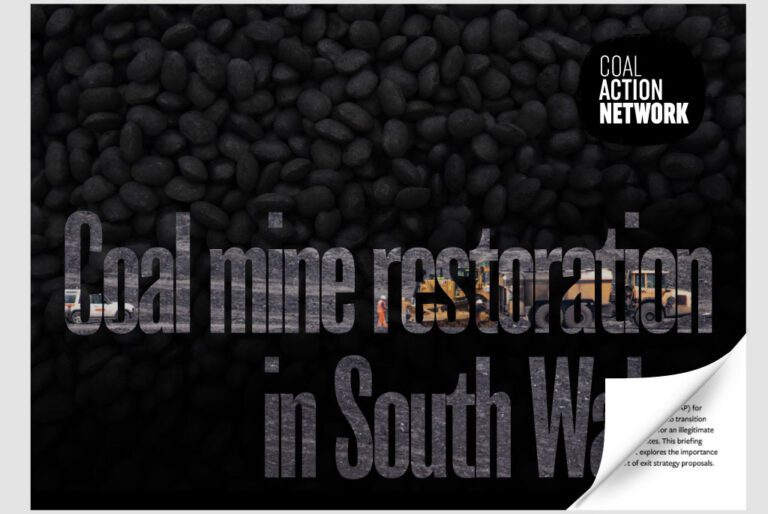
New research: coal mine restoration in Wales

Click the image or here for the full report

Summary

Countless communities across the UK were - and still are - being sold a lie by their Local Planning Authorities and mining companies.

This report combines field and desk-based research to reveal the continuing failure of Local Planning Authorities to honour promises made to local communities about how, and when, nearby opencast coal mines would be restored. The research finds that mining companies have consistently evaded restoration costs, and continue to hold Local Planning Authorities to ransom in funding even the bare minimum restoration which would otherwise bankrupt County Councils who would be lumbered with a financial liability amounting to tens of millions. Field research indicates that event those sites which Local Planning Authorities have confirmed by email to be fully restored contains uncovered and leaking storage tanks of industrial chemicals, abandoned warehouses, concrete platforms, and no-go zones sectioned off with barbed wire. COP26 broke new ground, with claims the UK would 'move beyond coal' - but we risk leaving behind communities that cannot ‘move beyond coal’ as they continue to live with the localised impacts of a natural environment ravaged by up to 80 years of opencast coal mining. It is in this context, that we provide an update to some of the findings within the 2014 report on the state of coal mine restoration in South Wales, commissioned by the Welsh Government.

We hope this research will spark renewed calls for the vital restoration work still required, ensure plans for the restoration of coal tips is accompanied by restoration of voids, and sound a warning against consideration given to new or extended coal mining in South Wales and beyond.

Recommendations

  1. A fresh and independent assessment is needed to cost the task of properly remediating poorly restored and unrestored opencast coal mines in South Wales (and across the UK). It is then incumbent upon the Welsh and UK Governments to provide those funds to secure the restoration promised to local communities. A well-resourced and supported taskforce will be needed to facilitate this process and see restoration works through to completion.
  2. Key restoration decisions must be led by local communities and guided by the independent advice of Natural Resources Wales.
  3. Coal tips should be addressed together with voids remaining from opencast coal mining, rather than approached in isolation. 2,456 coal tips litter Wales. 2021 saw fresh calls for their reclamation amid fears of another Aberfan tragedy if the coal tips become unstable, estimated to cost £500-£600 million. Some restoration schemes remedy nearby coal tips whereas other poorly restored coal mines effectively create new coal tips, such as the overburden now to be left at the exopencast coal mine, Nant Helen. For this reason, coal tips and voids cannot be addressed in isolation.
  4. In the interests of transparency and accessibility, all planning authorities should make all Planning Officers’ reports available online and clearly identified alongside associated planning documents. Neath Port Talbot County Council Planning Authority, for example, confirmed it does not make their Planning Officers’ reports routinely available online. Planning Officers’ reports are generally written in more lay terms than, and comprehensively summarise, sometimes 100s of, highly technical documents associated with that application. The content of, and recommendation within, Planning Officers’ reports also greatly influence the outcome of a planning committee’s decision.

Twitter-Storm against Cumbria coking coal mine

Senedd briefing on Aberpergwm coal mine

If in mobile view, scroll down for English language version and for PDF downloads of the briefings.

Crynodeb

Mae Cymru wedi cymryd camau pendant yn erbyn cloddio am lo yn y blynyddoedd diwethaf. Defnyddiwyd Deddf Cymru 2017 i rwystro estyniad i waith glo brig Nant Helen. Mae angen gweithredu tebyg nawr yn erbyn pwll glo tanddaearol Aberpergwm.

Mae Energybuild Cyf. yn ymestyn ei bwll glo golosg Aberpergwm ac am barhau i wneud hynny tan 2039. Mae hyn yn mynd yn groes i Ddeddf Llesiant Cenedlaethau’r Dyfodol drwy waethygu’r argyfwng hinsawdd a fyddai’n effeithio ar y genhedlaeth nesaf o amgylch y byd, yn ogystal â niweidio enw da Cymru’n rhyngwladol.

Mae gwaith dur Port Talbot yn bwriadu datgarboneiddio drwy drawsnewid i wneud dur newydd o fetel sgrap heb ddefnyddio glo; fel arall bydd yn rhaid iddo gau, gan ddiswyddo ei staff, a’r rhai mewn cadwyni cyflenwi. Does dim lle i fwy o gloddio am lo yn y Gymru fodern.

Mae glo’n cael ei gymysgu yng ngwaith dur Port Talbot ac, o’r herwydd, nid yw cloddio mwy o lo yng Nghymru’n lleihau’r swm a echdynnir mewn mannau eraill. Mae’n rhaid i fwy o lo gael ei fewnforio o hyd i’w gymysgu â glo Cymru mewn gweithfeydd dur, gan allforio rhai o’r problemau amgylcheddol a chynnal diwydiant anghynaliadwy yn hytrach na chwilio am atebion hirdymor.

Mae cyllid Energybuild Cyf. yn dangos y gallai’r cwmni hwn werthu’r pwll os yw’n gallu ymestyn. Gallai’r cwmni newydd wneud y mwyaf o echdynnu glo a gwerthu’r glo i’r cynigydd uchaf, neu ddiswyddo nifer fawr. Mae yna ffyrdd eraill o wneud dur a ffynonellau eraill o hidlo dŵr yn lle glo carreg.

Mae dau gynnig arall i ehangu pyllau glo yng Nghymru y mae angen i’r llywodraeth eu hatal, a hefyd sicrhau bod safleoedd mwyngloddio blaenorol yn cael eu hadfer yn llawn.

Glo yw treftadaeth Cymru, nid ein dyfodol.

Summary

Wales has taken decisive action against coal mining in recent years. The Wales Act 2017 was used to block the extension of Nant Helen opencast coal mine. Similar action is now required against Aberpergwm underground coal mine.

Energybuild Ltd are extending its Aberpergwm coking coal mine and want to continue to do so until 2039. This goes against the Well-being of Future Generations Act by worsening the climate crisis which would affect the next generation around the world, as well as damaging Wales’ reputation internationally.

Port Talbot steelworks is looking to decarbonise by converting to make new steel from scrap metal without using coal; otherwise it will have to close, making its staff, and those in supply chains, redundant. There’s no place for more coal mining in a modern Wales.

Coal is blended at Port Talbot steelworks and, as such, mining more coal in Wales does not reduce the amount extracted elsewhere. More coal still has to be imported to be blended with Welsh coal at steelworks, exporting some of the environmental problems and propping up an unsustainable industry rather than looking for long term solutions.

Energybuild Ltd’s finances show that this company may well sell on the mine if it is able to extend. The new company could maximise coal extraction and sell the coal to the highest bidder, or make a large number of redundancies. There are alternative ways to make steel and alternative sources of water filtration to anthracite coal.

There are two further coal mine expansion proposals in Wales which the government needs to prevent, while ensuring that previous mining sites are fully restored.

Coal is Wales’ heritage, it isn’t our future.

Webinar on restoration in South Wales

The webinar

This webinar draws on the recently launched report, ‘Coal Mine Restoration in South Wales’, revealing the injustices and broken promises surrounding the restoration of 7 opencast coal mines in South Wales. It serves as a stark warning for any future coal mine proposals.

The webinar will offer a whistle-stop overview of the desk-based and primary research findings, with key analysis and recommendations. You'll see photo evidence that's been exclusively shared with us of the current state these former coal mines are in.

This webinar was first run in December 2022

Attendance details

Time: 11am-12'noon (1 hour)

Date: Tuesday 14th February 2023

Eligibility: this webinar is intended for staff at relevant councils in South Wales

Registration required: contact us for details.

The research

The research finds that mining companies have consistently evaded millions in restoration costs, and Local Planning Authorities struggle to keep promises made to local communities impacted by unrestored or poorly restored coal mines. Field research indicates that even those sites which Local Planning Authorities claimed to be fully restored contain uncovered and leaking storage tanks of industrial chemicals, abandoned warehouses, concrete platforms, and no-go zones sectioned off with barbed wire.

The ‘Coal Mine Restoration in South Wales’ report updates a 2014 Welsh Government report, ‘Research into the failure to restore opencast coal sites in south Wales’ on the state of restoration across Wales, which flagged these sites as liabilities for being left unrestored or poorly restored.

Deiseb: Llywodraeth Cymru Peidiwch ag ehangu pwll glo brig mwyaf y DU

See our English language version of this webpage.

Mae Cymru ar fin penderfynu a ddylid ehangu pwll glo brig mwyaf y DU gan bron i 4 blynedd a 2 filiwn tunnell o lo. Bydd hyn yn gyrru newid hinsawdd gan bron i 6 miliwn tunnell o CO2 a 16,000 tunnell o fethan.

Mae pwll glo Ffos-y-fran ym Merthyr Tudful sy’n chwalu’r hinsawdd yn echdynnu hyd at 50,000 tunnell o lo bob mis – sef glo y dyfarnodd Llys Cyfiawnder Ewrop ei fod yn creu gormod o lygredd i’w losgi yn hen orsaf bŵer Aberddawan, ac sydd bellach yn cael ei losgi’n bennaf mewn gwaith dur. Mae hyn yn rhwymo gwaith dur TATA i fod yr 2il safle mwyaf llygredig yn y DU!

Sign the petition now

Digon yw digon!

Mae deisebwyr yn mynnu bod Llywodraeth Cymru:

  1. yn cymryd drosodd y cyfrifoldeb am benderfynu, os bydd y Cyngor lleol yn ystyried rhoi caniatâd cynllunio i ehangu pwll glo brig Ffos-y-fran.
  2. yn gweithredu ar wyddoniaeth hinsawdd, yn gwrando ar drigolion lleol, ac yn dilyn ei chyfreithiau a’i pholisïau ei hun megis Deddf Llesiant Cenedlaethau’r Dyfodol.
  3. yn gwrthod yn gyflym ehangu pwll glo brig mwyaf y DU, yn cynnwys cynllun peilot Incwm Sylfaenol Cyffredinol y gweithwyr, ac yn buddsoddi mewn swyddi sydd â dyfodol.

Pam mae hyn yn bwysig?

Pan roddwyd caniatâd gan Lywodraeth Cymru yn 2005, cafodd y gymuned leol ym Merthyr Tudful, a oedd wedi brwydro’n ffyrnig yn erbyn y cynnig, addewid y byddai mwyngloddio’n dod i ben ar ôl 15 mlynedd, ar 6ed Medi 2022 ac y byddai’r gwaith o adfer y tir wedi’i gwblhau ychydig flynyddoedd yn ddiweddarach. Ond adroddir nad yw mwyngloddio glo wedi dod i ben, gan ddifetha’r heddwch hir-ddisgwyliedig i’r gymuned leol sy’n gallu gweld a chlywed y pwll glo o’u cartrefi. Ac yn awr mae'r cwmni mwyngloddio wedi gwneud cais i ehangu'r pwll glo am 9 mis, ac wedi dweud y bydd yn ceisio am 3 blynedd arall o gloddio am lo, (a phwy a ŵyr beth y tu hwnt i hynny...?).

Bydd hyn nid yn unig yn hybu newid yn yr hinsawdd gan bron i 6 miliwn tunnell o CO2 a 16,000 tunnell o fethan, ond hefyd yn achosi dioddefaint i’r trigolion cyfagos trwy’r ffrwydradau pellach, llygredd sŵn a llwch. Ar ben hyn, bydd y gwaith adfer hir-ddisgwyliedig ar y tir yn cael ei wthio yn ôl gan flynyddoedd, gyda phryderon na fydd byth yn digwydd.

Sut y cyflwynir y ddeiseb

Bydd y ddeiseb hon yn cael ei chyflwyno i Julie James, Gweinidog Newid Hinsawdd Cymru.

Sign the petition now

Published: 23/11/22

Sign this petition to stop the expansion of UK’s biggest opencast coal mine

See our Welsh language version of this webpage.

Wales is about to decide whether to expand the UK’s largest opencast coal mine by nearly 4 years, emitting almost 6 million tonnes of CO2, and 16,000 tonnes of methane from the coal mine itself.

The climate-trashing Ffos-y-fran coal mine in Merthyr Tydfil extracts up to 50,000 tonnes of coal every month – coal that the European Court of Justice ruled was too polluting to be burned in the old Aberthaw power station, and is now burned mainly at steelworks. This locks TATA steelworks into being the UK’s 2nd most polluting site!

Sign the petition now

Enough is enough!

We demand that the Welsh Government:

  1. calls in the decision if the local Council considers granting planning permission to expand the Ffos-y-fran opencast coal mine.
  2. acts on climate science, listens to local residents, and follows its own laws and policies such as the Future Generations Act.
  3. swiftly rejects expanding the UK’s largest opencast coal mine, includes workersa Universal Basic Income pilot, and invests in jobs with a future.

When permission was granted by the Welsh Government in 2005, the local community in Merthyr Tydfil, who had fought the proposal fiercely, were promised that mining would end after 15 years, in September 2022 and that restoration of the land would be complete by the end of the following year. Yet it’s reported that coal mining hasn’t stopped, ruining the long-awaited peace for the local community who can see and hear the coal mine from their homes. And now the mining company has applied to expand the coal mine by 9 months, and has said it will for a further 3 years of coal mining, (and who knows what beyond that...?).

This will not only fuel climate change by almost 6 million tonnes of CO2, but inflict explosive further blasting, noise and dust pollution on nearby residents. On top of this, the long-awaited restoration of the land, will be pushed back by years, with concerns that it will never happen.

Sign the petition now

Published: 21/11/22

We don’t need to set fire to our future to keep warm this winter

We sometimes hear from people that they are worried coal may be a necessary evil to keep us warm this winter. But the worst effects of this energy crisis was, and to some extent is, avoidable. Low-hanging fruit include home insulation, community-owned renewable energy generation, and an effective windfall tax on profiteering energy companies. These measures can be rapidly deployed, and we’ve seen from Covid what the Government can achieve big changes when there is political will to. Coal is not, and for the sake of our future, cannot be, the answer to how keep warm this winter. That is why half the demands of the Warm This Winter campaign centre around renewable energy and excluding fossil fuels as the way we will access affordable energy this winter and in future years.

Demand #3: Cheaper energy

The Warm This Winter campaign’s  3rd demand is access to cheaper energy—“Clean, renewable energy is now nine times cheaper than gas and can be brought online quickly”. Subsidy-free solar, in particular, has been demonstrated as cheaper than its fossil fuel alternatives. Prices have fallen dramatically for renewable energy since introduction – whereas fossil fuels continue to rely on huge Government subsidies, infrastructure, and underwriting of risk.

Demand #4: No fossil fuels

The 4th demand of the Warm This Winter campaign is to cut out fossil fuels as “it keeps us locked into an unaffordable energy for far longer than necessary”. The UK Government sells our natural resources to companies that extract it and sell it back to us at unaffordable prices to generate huge profits for themselves—never more so than in 2022.

Coal, and keeping warm this winter - a reality check

The energy crisis has created a swing in vocal public support for coal mining since the energy crisis, and with it, political support for coal mine applications has grown in the highest echelons of Government. The Government has sent mixed signals recently on whether it will approve or reject the Whitehaven coal mine application, which has now been delayed by a further month to before the 9th December 2022.

It is particularly clear that the Government is using the energy crisis as an excuse to abandon its climate commitments wholesale since it’s citing the energy crisis for renewing its support for coal mine applications… that have nothing to do with power generation. All the current coal mine applications are to mine coal for industry—not power generation.

The Government will hand over £420 million in tax money to profiteering energy companies to keep old coal power stations, like West Burton, and coal units, like Drax, chugging along this winter. These power stations and units were scheduled for closure in 2022, but now these dirty, dusty relics will be stoked with thousands of tonnes of imported coal, paid for with our taxes. In fact this move is expected to generate so much pollution that the Government has instructed the Environment Agency to ignore its responsibility to enforce pollution limits when it comes to coal fired energy production this winter. People living locally to these power stations will pay the price in potentially dangerously poor air quality, but we will all pay the price in our taxes and in our future compromised by the climate change a reliance on coal fuels.

This energy crisis has been worsened by the Government’s past and current policies

Home insulation

Rolling out home insulation tackles the energy crisis and bills not just this year, but for many years to come—and the impact is immediate. It would also help the Government get back on track with its climate commitments as housing is responsible for 19% of the UK’s carbon emissions. This should be a top priority for Government in tackling the cost-of-living crisis and energy crisis together this winter.

In 2012, the UK insulated 2.3 million loft or cavity walls. But a shift in Government policy saw uptake drop by 90%. This Government decision to cut support for home insulation after 2012 has cost taxpayers, like me and you, £1 billion in energy bills this year. If the Government had maintained the same level of support, nearly 50% of UK homes could have been insulated by now. A more recent scheme by the UK Government collapsed, and was blasted by the Audit Office for being “botched”. This would have significantly reduced the energy crisis this winter, along with our bills. Households living in homes with poor efficiency ratings will pay around £1000 more this winter.

Renewable energy

The British public overwhelmingly support the rollout of renewables, with 78% supporting solar power, 75% offshore wind, and 70% onshore wind. Unlike non-renewable sources of power like nuclear power stations, renewable energy infrastructure can be rapidly scaled up and brought online. With clear public support, the Government could rapidly accelerate renewable energy roll-out that isn’t vulnerable to shifts in geopolitics and global supply chains.

Because renewable energy is modular—one wind turbine or one solar panel can be bought and set up, or 1000s—its more affordable for communities buy their own equipment and become power generators, with the profits returning to those communities rather than disappearing into the pockets of big business. The Government acknowledges the value of community-owned renewable energy, but isn’t doing enough to encourage it. Instead, the Government dropped the Social Investment Tax Relief for community energy and has failed to provide the financial guarantees it provides to other energy projects like nuclear power stations. If the UK faced this winter with a resilient network of renewable energy zones, our dependence on gas and fossil fuels would have been much lower, and energy prices would be more insulated from Russian sanctions, geopolitics, and global demand and supply shifts.

Windfall tax that works

The Government imposed a windfall tax in May 2022 as a one-off tax on the record profits made by energy companies that are due to lifted Covid restrictions and supply concerns around Russia’s invasion of Ukraine. However, BBC reported: “BP reported its biggest quarterly profit for 14 years, making £6.9bn in the three months to June. Shell recorded even higher second quarter profits of £9bn and made £8.2bn in the following three months. The majority of the April to June takings won't be hit by the government's windfall tax, as it only applies from 26 May”. The Guardian reported “Shell has paid zero windfall tax in the UK despite making record global profits of nearly $30bn (£26bn) so far this year”. Yet the Government has resisted pressure to tax these record profits and redistribute to cushion energy prices, so less of the UK have to choose between food and heating this winter.

Published: 14/11/2022

How global insurers compare on fossil fuels in 2022

Insure our Future 2022 Scorecard is out

Analysing 30 leading primary insurers and reinsurers, assessing their policies on insuring and investing in coal, oil, gas, the 6th Annual Scorecard cuts through the greenwash and sorts the meanest from the greenest. The report highlights progress and loopholes, calls out leaders and laggards, and identifies challenges and opportunities for the year ahead.

Read the full report here

Coal

The number of coal exit policies has grown from 35 to 41 this past year, with major US insurers known for their role in fossil fuels AIG and Travelers finally getting on board. The market share of insurers with coal exclusions has reached 62% in the reinsurance and 39% in the primary insurance markets.

In terms of new power stations, this is good news: according to the report many of the key laggards that are continuing to underwrite new coal projects lack the capacity and expertise involved in insuring complex large-scale new coal power plants.

There is still a lot of work to do: many companies still have no policies excluding coal, and some of those that do extend only to power stations and thermal coal mines, not coking coal mines. Meanwhile Lloyds of London's coal exclusion guideleines are non-mandatory, and they take on 40% of the global energy market.


Oil & Gas

Insurance company restrictions on oil and gas are only just starting to catch up with those on coal. The new report shows 13 companies have adopted oil and gas restrictions, compared with 41 on coal.

Be it in the IPCC’s 1.5°C report, the IEA’s Net Zero Roadmap or the One Earth Climate Model, climate scientists are clear that there is no space for any new coal, oil or gas projects in credible pathways to limit global warming to 1.5°C. Yet most insurance companies have not taken this scientific evidence on board and continue to offer support to projects and companies expanding oil and gas production

Some insurers like Liberty Mutual, Chubb and Tokio Marine have adopted some restrictions on coal but actively insure the expansion of the oil and gas industry.

Community consent

For the second year running, companies were ranked on their policies of Free, Prior and Informed consent: i.e. do they support projects that are in conflict with communities, and respect the right of communities to say no?

In summary, very few of them commit to anything like this.

While Allianz and Swiss Re mention of the right to Free Prior Informed Consent (FPIC) in their policies, AXIS Capital was the first insurer to adopt an explicit policy “to not provide insurance coverage on projects undertaken on indigenous territories without FPIC” in accordance with the United Nations Declaration on the Rights of Indigenous Peoples. The policy marks an important breakthrough for the recognition of Indigenous rights and other insurers should emulate it.

- Insure Our Future 6th Annual Scorecard Report

Public pressure made the difference

“So far, there hasn’t been real regulatory pressure. And there hasn’t been market pressure … as in the short term, it’s still a profitable business. So we think public pressure has really made an essential difference”

- Lindsay Keenan, Insure Our Future (the Guardian)

As part of the StopEACOP Coalition, we've been mobilizing to persuade insurers at Lloyds of London to drop the contraversial East Africa Crude Oil Pipeline.

Not only does this make the pipeline harder to finance, it also informs insurance companies about the damaging impacts of oil and gas pipelines, and is part of the movement to shift the whole industry away from fossil fuels.Sign up here to commit taking regular action with us - it's easy to do from home!

More major banks and insurers refuse to support EACOP: Lloyds syndicates silent

Four fewer banks and five fewer insurers on side with EACOP

Along with our partners in the #StopEACOP coalition, Coal Action Network has been targetting insurers to turn the tide on fossil fuel insurance. This month, QBE, Suncorp, Generali, Aspen and Helvetia stated that they will not be providing insurance support to the East Africa Crude Oil Pipeline (EACOP).

They follow five other insurance companies who ruled out the project in recent months, making 18 insurance companies who have ruled it out overall. QBE and Suncorp are two of Australia's biggest insurers. Generali is Italy's biggest insurer.

In addition, Italy’s largest bank Intesa Sanpaolo, Germany’s second largest bank DZ Bank, as well as Natixis from France, have joined the growing list of banks that have ruled out direct finance for the EACOP project, bringing the total to 24. Spanish bank Santander is also understood not to be financing the project, which would be precluded as part of the bank's Environmental, Social and Climate Change Risk Management Policy.

Pressure is growing

Is the EACOP project looking less and less viable? There are now no French banks backing EACOP (Total Energies being a French company), and these refusals are coming from the company's former backers.

“With so many of Total’s financiers out of the running to join the $2.5 billion project loan the EACOP needs to proceed, the pressure is growing on those few that remain. This includes South Africa’s Standard Bank, Japan’s SMBC and MUFG, Industrial and Commercial Bank of China and Bank of China, as well as UK’s Standard Chartered, which as chair of the Net Zero Banking Alliance should not be going anywhere near new oil projects of any kind, especially not one as mired in human rights and environmental damage as this.”

-Ryan Brightwell, Campaign Lead Banks and Human Rights at BankTrack

"On the side of human rights violators"

EACOP has been condemned by the European parliament for its associated human rights abuses in Uganda and Tanzania. The pipeline and associated Tilenga oil field are expected to displace almost 118,000 people in Uganda and Tanzania, and since last week nine peaceful protestors were arrested following a student-led peaceful demonstration against EACOP in Kampala, Uganda.

“Lending or underwriting to projects that are mired in human rights violations, lacking in free prior and informed consent is wrong, shameful and unacceptable. The (re)insurers and banks that are still considering or are committed to underwriting EACOP cannot claim innocence, they are on the side of the human rights violators and this therefore makes them complicit.”

-Omar Elmawi, co-ordinator of the StopEACOP

Many of the insurance companies which have failed to rule out insurance for EACOP have syndicates at Lloyd’s of London, where the companies behind EACOP have reportedly been looking for insurance cover. These include Arch, AIG, and Chubb to name a few. These insurers must rule out EACOP immediately, to stand against the human rights abuses that are taking place in the name of this climate-wrecking pipeline. Lloyd’s Council urgently needs to commit the marketplace to policies ruling out new fossil fuel projects in alignment with the science on keeping global temperatures below 1.5C warming.

Who are the targets now?

Companies who have not responded to the campaign's requests for comment are:

Aegis London, AIG, Arch, Brit, Canopius, Chaucer, Chubb, Cincinnati, Liberty Mutual, Lancashire Syndicates and Tokio Marine Kiln.

All of these have syndicates at Lloyds of London. The Lloyds council is responsible for regulating the Lloyds Marketplace (see Lloyds explainer here), and could bring in measures to stop fossil fuel projects, and those with human rights abuses, from being targetted.

Take Action with us!

We can see these tactics are working. But we need all insurance companies to rule out EACOP, and stop the toxic pipeline at its source. Next, we want Arch insurance to rule it out, and we know that constant pressure works.

Sign up here to commit taking regular action with us - it's easy to do from home!