A guide to challenging extractive applications near you
This guide draws on 18 years of organisational knowledge fighting opencast coal mine applications. This was always shoulder-to-shoulder with local communities trying to preserve their local environment, way of life, and often motivated by the looming threat of global climate chaos.
Coal Action Network has existed since 2008. It started out as a few committed activists, with a founder working many unpaid hours, living in their van, and staying in the communities we worked in. This guide is thanks to their dedication. At the start, we were opposing about 40 live applications for new opencast coal mines and extensions. Now there are none.
We have witnessed first-hand the power of committed local campaigns successfully stop applications despite the deep pockets of developers and a planning system tilted in their favour.
The threat of opencast coal mines in the UK is hopefully over – but many of the tactics we learned along the way can be used for most extractive planning applications, from a tungsten mine to a quarry. We offer this guide to any group navigating the planning system to oppose an extractive development in their community.
"Never doubt that a small group of thoughtful,
committed citizens can change the world: indeed,
it’s the only thing that ever has."
- Margaret Mead
This guide focuses on action through the planning system, but Direct Action can be taken instead of, or alongside, action through the planning system. Any tactic where people take action to directly bring about the outcome they want, rather than trying to persuade institutions (courts, politicians, regulators) to act in their favour. This can be legal or illegal action, and accountable or unaccountable. An example of legal (at the time of writing) and accountable direct action would be ‘slow walking’ HGVs driving to or away from the site to develop it. This action involves walking slowly in front of the HGV, thereby delaying it – wear a high visibility jacket and do this carefully to maintain personal safety. Coal Action Network has historically supported direct action to oppose opencast coal mining. There are many guides on taking direct action on the internet, we recommend Seeds for Change’s guide.
This guide tries to help communities oppose extractive applications, such as quarries, via the planning system. It draws on CAN's experience since 2008 of standing alongside communities to face down opencast coal mine applications, often successfully.. If you live in one of these geographies, it’s worth double-checking the planning process where you are. This guide draws on Coal Action Network’s experience of supporting local communities to oppose opencast coal mining since 2008. Much of this experience is applicable to communities opposing any large development in their area, particularly extractive industries such as quarrying.
A local campaign group is just a group of people coming together in an area to campaign on a shared issue. After the issue passes, the group can stop meeting – or can go on to campaign on other issues that might matter to the group. Below is a summary of advice for forming and maintaining your local campaign group – but there is lots of advice on the internet. We recommend this guide.
Organising together as a group will:
There are various ways to go about kicking off a campaign group such as:
The first meeting is high-stakes, you can lose people or win a committed core of the group. Here are some tips for a great first meeting of the new group:
Top tip: tea and biscuits make every meeting better!
How you divide up the work will partly depend on how much there is to do and what capacities and strengths members of the group have. It may be sensible to group tasks as:
A significant planning application can take 6 months to 5 years to be decided. This uncertainty and length of time can make it challenging to maintain momentum in the group. Consider:
At some point you will likely need some financial resources to fund things like:
Depending on the application you are opposing, and whether legal advice is needed, you could require from £50 to over £100,000 (see Getting legal advice), so your fundraising activities will vary greatly depending on your funding requirements. There are guides to fundraising online – we like the Resource Centre’s guide, and their advice on taking card payments. Options for fundraising can include:
It is common for developers to carry out pre-application engagement with the Local Planning Authority and public consultation to test the waters before submitting a full application form, at which point significant changes are harder and more expensive to make. Sometimes a developer at this stage is also trying to determine if a development is worth pursuing and has little invested. So there is an opportunity here to persuade a developer not to take a proposal further – but be aware sometimes a developer will file an application years after this initial pre-application phase.
To dissuade a developer taking an application further, you want to convince the developer that they are unlikely to gain planning permission or it will take a long time with strong local resistance – uncertain delays are likely to cost the developer more and make b`udgeting difficult. You can do this by:
The Local Planning Authority may not list a proposal on its planning portal until a formal application has been made by the developer. So, if you hear of a development proposal:
Once an application has been received by a Local Planning Authority, it will be uploaded to the Local Planning Authority’s online planning portal which is normally a section within the council’s website. It can take a few days for the application to appear on the online planning portal. Not all online planning portals are the same, but most have a ‘key word’ search function, you can try to find the application this way. If that does not locate the application, email the planning department for the application’s planning reference or a link to it in the online planning portal – you can usually find an email address for the planning department in the planning area of the council’s website. A planning reference often looks something like P/25/0037, is unique, and can be used to find the application in the online planning portal.
Top tip: bookmark the planning application page as you will want to check this page frequently for any new information/progress on the application.
Sometimes application forms are very brief and just fulfil formalities without much detail. This detail will come later in the EIA, or sometimes supplementary documents from the developer such as a planning outline or a survey. However, there is usually some useful information:
If the application requires an EIA, the Local Planning Authority is required to give a 28-day public consultation some time after the EIA is made available (generally on the online planning portal – it could instead be made available for viewing in paper-based form at the council offices but we haven’t known this to happen for years). If the application does not require an EIA, the Local Planning Authority is only required to give a 14-day public consultation (or 21 days if it is not published in a newspaper). If you can convince the Local Planning Authority to extend the public consultation (see below), or repeat it, it can be useful as it will delay the application which would likely weaken the developer’s business case for the development and may eventually contribute to the developer pulling out. In very rare instances, the Local Planning Authority may determine a planning application before the consultation ends.
Public consultation (EIA and non-EIA)
Your objection to the planning application
Send in your own objection during public consultation. You can draft it before the consultation begins so you can get it in early, but also so you have as much time as possible to encourage others to object within the public consultation period. Objections can be sent in after the consultation period, but Planning Officers are not obligated to consider those – though still worth submitting as they often do get considered in our experience. Coal Action Network has a sample consultation response.
Other people’s objection to the planning application
A planning application must be in the ‘public interest’ to be granted planning permission. The more people who write in to object to the planning application, the more likely it will be that the Local Planning Authority will decide it is not in the public interest. The greater the impact of the proposed development on the person objecting, the more weight that objection is generally given. That usually means residents living closest to the development, or along roads leading to the site that may see increased HGV traffic. Therefore, it is good to focus your energy on these people writing objections to the Local Planning Authority, and including their address in emails/letters.
Encourage people to object to a planning application by:
Check the Planning Committee meeting agendas to see if the development you oppose is due to be considered in the next meeting (usually monthly). The agendas are usually published online about a week before the meeting. If you can’t find it on the Council’s website, email the Planning Officer and ask where you can find the agenda, and when agendas are generally published online.
Congratulations! You successfully fended off an extractive development in your area… but it might not be over – sorry. The developer may now choose to do one of three things:
If the developer thinks there will also be vocal local opposition to an appeal or an amended application, they may decide it is less likely to be successful or they don’t need that headache – and move on. Therefore, it is good to celebrate a refusal loudly to let the developer know you’ve still got energy for the fight, and underscore in your press release that any similar applications in the future will also be fought against by the local community.
This can be gutting, particularly given all the evenings spent poring over planning jargon and days of whipping up local opposition to the application. The planning system is tilted in favour of big developers and the impacts on your quality of life and nature unfortunately take a back seat, even if not officially. Cash-strapped Local Planning Authorities also sometimes approve planning applications just to avoid big developers’ costly appeals against refusals, which can run over £100,000.
But all may not yet be lost. Whether decision was made by the Local Planning Authority, a Planning Inspector, or by a Minister, if they failed to consider some factor that was material to planning – or failed to give that factor sufficient weight – when making the decision to grant the application planning permission, you may be able to quash (negate) the planning permission with a judicial review challenge, forcing the Local Planning Authority to reconsider the application.
Ordinarily planning applications are decided by the Local Planning Authority (by either the Planning Officer or the planning committee). However, occasionally a planning application for a significant development will have impacts beyond its immediate surroundings or create widespread controversy. In these cases (look up all the grounds), if the government thinks that the Local Planning Authority cannot give these factors due consideration, it may choose to call in the application to be decided by the Government. If an application is determined the Local Planning Authority, it cannot subsequently be called-in. However, an application is often not called in until the Planning Officer’s report is published – so there is a small, nail-biting window of time in which you’ll find out if the application will be called in.
Be aware that very few planning applications are called in – only 198 planning applications were called in between 2010-2023, that’s 1 in every 23,000. Of the 43 planning applications called in 2019-2023, 60% were subsequently granted permission – a successful call-in doesn’t mean an application will get rejected.
How to get a planning application called in
England -
Wales -
Scotland -
Northern Ireland -
Process of a called-in application
Judicial reviews can be daunting… but can also be a successful last-ditch effort to stop an extractive project near you. Judicial reviews recently prevented oil drilling in Surrey and a huge underground coal mine in West Cumbria.
Getting legal advice from solicitors that specialise in planning and environmental law has a number of benefits.
However, solicitors’ costs can rapidly spiral and planning applications have been successfully opposed by local campaign groups without involving solicitors. Solicitors ostensibly charge by the hour – sometimes in 12-minute increments! So, keep communications with the solicitors focused and concise, and if there is something you can do e.g. finding contact details for planning councillors, it’ll be cheaper if you do it for the solicitors. Agree your budget and deliverables with the solicitors from the outset so that everyone is clear what the expectations are. We use Richard Buxton Solicitors, who specialise in environmental and planning law. They also have a great deal of experience helping oppose extractive projects. However, there may be legal campaign groups who will take on the case pro-bono (for free) such as Good Law Project, Lawyers for Nature, and the Environmental Law Foundation.
Depending upon what stage you involve solicitors, they can have a less or greater impact – generally the later the stage, the more worthwhile it is to involve solicitors.
Supporters of Sirhowy Valley Country Park are people of the local area in Caerphilly who have come together to oppose the proposal to mine two disused coal tips north of the town of Bedwas, threatening the adjacent Sirhowy Valley Country Park . This proposal would see the extraction and sale of 400,000 tonnes of coal that was left behind as waste within the two coal tips. The third coal tip, closest to the town of Bedwas would be untouched.
Stop Adani is becoming one of Australia's biggest ever grassroots campaigns. If Adani's Carmichael mine goes ahead it will d estroy the ancestral lands, waters and cultures of Indigenous people, do irreperable damage to groundwaters and the ocean, and add 4.6 billion tonnes of carbon pollution to our atmosphere.
#Stop Adani
Facebook: https://www.facebook.com/stopadani/
Twitter: @stopadani
Instagram: stopadanimovement
Adani's insurers and potential insurers are based in the UK, so Coal Action Network supporters have been organising in support of Stop Adani's call to prevent the mine getting insurance, with ongoing actions targetting London-based insurance firms and the insurance marketplace, Lloyds of London.
West Cumbria Mining proposes 'Woodhouse Colliery', a 50-year mine near Whitehaven in Cumbria which would produce 2.78 million tonnes of coking coal a year. The large scale underground and under-sea mine would generate over 9 million tonnes of CO2 per year producing coking coal with over 85% being exported to European steel works.
There are two main campaigns to stop Woodhouse Colliery
South Lakes Action on Climate Change (Towards Transition) undertake a range of climate-related activities in the South Lakes Area. They bring planning expertise to the campaign to stop Whitehaven, and have useful resources on their website:
Website: https://slacc.org.uk/campaigns/cumbria-coal-mine/
Keep Cumbrian Coal in the Hole is run by Radiation-free Lakeland, focussing on the site's proximity to Sellafield nuclear plant and on local environmental impacts.
Website: https://keepcumbriancoalinthehole.wordpress.com/
Facebook: https://www.facebook.com/stopthecumbriancoal/
While the application was approved in 2019 and again in October 2020 by Cumbria County Council, it is now going to Public Inquiry in September 2021. Following the public inquiry the Secretary of State for Housing Communities and Local Government, currently Robert Jenrick, will decide the application.
A Europe-wide network opposing imports of coal to Europe through direct action and education, with a focus on neocolonialism in European coal consumption
Email: info@decoalonize-europe.net
Facebook
Twitter: https://twitter.com/deCOALonize_eu
As part of Still Burning, Coal Action Network contributed to this report on Coal, Colonialism & Resistance.
London Mining Network (LMN) is an alliance of human rights, development, environmental and solidarity groups of which Coal Action Network is a member. The network focuses on international mining companies listed on the London Stock Exchange, by monitoring human rights and environmental abuses, enabling communities on the front lines of mining in the global south to hold these companies accountable.
Website: londonminingnetwork.org
Email: contact@londonminingnetwork.org
Facebook: https://www.facebook.com/londonminingnetwork/
Twitter: https://twitter.com/londonmining
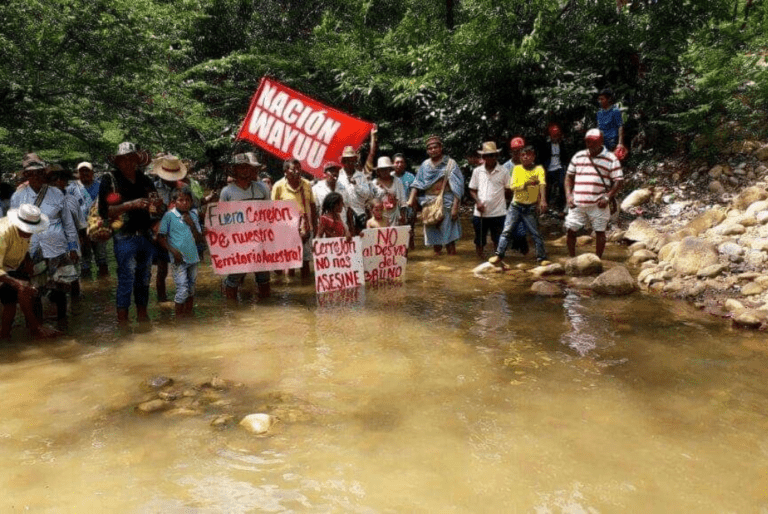
Coal Action Network works with LMN, frontline communities in La Guajira and international allies against the expansion of the Cerrejón coal mine in La Guajira, Colombia.
Europe Beyond Coal campaigns to ensure coal is phased out throughout Europe by 2030 at the latest. The campaign involves civil society groups working across 28 European nations, including the Western Balkans and Turkey. This is focused on power stations, but also looks at mines.
Website: https://beyond-coal.eu
Email: contactbeyondcoal.eu@gmail.com
Facebook: https://www.facebook.com/EuropeBeyondCoal/
Twitter: https://twitter.com/EurBeyondCoal
Instagram: https://www.instagram.com/europebeyondcoal
UVAG (United Valleys Action Group) is a community campaign group working in the Heads of The Valleys zone in South Wales since 2010.
Facebook
Twitter: @UnitedValleys
UVAG represents the interests of the many ex-coalmining communities in the upper South Wales valleys and has successfully fought several major and protracted campaigns, notably the rejection of the huge mass-burn incinerator proposed by the American company, Covanta, and the massive Nant Llesg opencast coalmine and its subsequent planning appeal.
UVAG continues to fight for environmental and social justice at home, and lending its campaigning expertise and support to other communities in the UK.
A community campaign group lead by residents of Throckley, Newcastle, against Banks Group's plan to extract 800,000 tonnes of coal and 40,000 tonnes of fireclay from agricultural and wooded land. They have raised concerns about the impact on local wildlife, access to countryside, local watercourses and the climate emergency.
Facebook: https://www.facebook.com/defendewleyhill
Twitter: https://twitter.com/DefendDewley
In November 2020 this campaign won and residents stopped Banks Group's last ever application for an opencast coal mine. Since summer 2019, Defend Dewley Hill have amassed thousands of letters of objection to the opencast, lead walks on the land to connect people with nature, and built networks across Newcastle to fight the opencast together.
Save Druridge successfully defended the idyllic Northumbrian coastline and tourist destination 'Druridge Bay' from becoming a 3 million tonne opencast coal mine, known as 'Highthorn' proposed by Banks Group.
Website: https://www.savedruridge.co.uk
Email: email here
Facebook: https://www.facebook.com/savedruridgebay
Twitter: https://twitter.com/SaveDruridge