
Yesterday the UK Government released its updated National Planning Policy Framework (NPPF) in which it has banned new coal mining in England. This is welcomed by Coal Action Network and our supporters who have worked to oppose new coal mines for many years. This updated policy prevents local authorities from approving new…

Coal Action Network is calling for the UK’s vast mine‑water heat potential to be matched by greater ambition to harness this local, low‑carbon resource for communities. We are mapping areas of high geothermal potential and identifying anchor customers with consistent heat demand…

This guide draws on 18 years of organisational knowledge fighting opencast coal mine applications. This was always shoulder-to-shoulder with local communities trying to preserve their local environment, way of life, and often motivated by the looming threat of global climate chaos…

CAN was one of 109 respondents to the UK Government’s consultation on ‘Growing the market for low carbon industrial products: policy framework’. This consultation was to contribute to the UK Government’s announced plans to work with industry to establish green…

Carmarthenshire County Council has rejected Bryn Bach Coal Ltd’s second attempt to expand and extend the currently dormant Glan Lash opencast coal mine, amidst hundreds of hand-written and online objections from residents in the county. The decision reflects a clear, strategic commitment to climate leadership, rare habitat protection, and safeguarding the health of surrounding communities. There are no live applications for new coal mines…

Earlier this month, the King’s Speech marked a major milestone for our campaign for the introduction of legislation which will ban new coal mines. The Government formally announced the Energy Independence Bill, and with it a commitment to ‘Implement the manifesto commitment to end new coal licenses’. This is a breakthrough…

During their party conference, Plaid Cymru announced plans for their first hundred days of Government, should they win the Welsh election. Having now formed the Government, we hope to work with them and other Members of the Senedd to achieve some of those priorities. This is the last of three posts outlining opportunities which could help them to do that…

Deep coal mines have a long history in the UK dating back some 400 years. On the other hand, opencast coal mines only became common between 1940 and 60, becoming the dominant mining method in the UK as deep coal mining entered rapid decline. Opencast coal mining techniques…

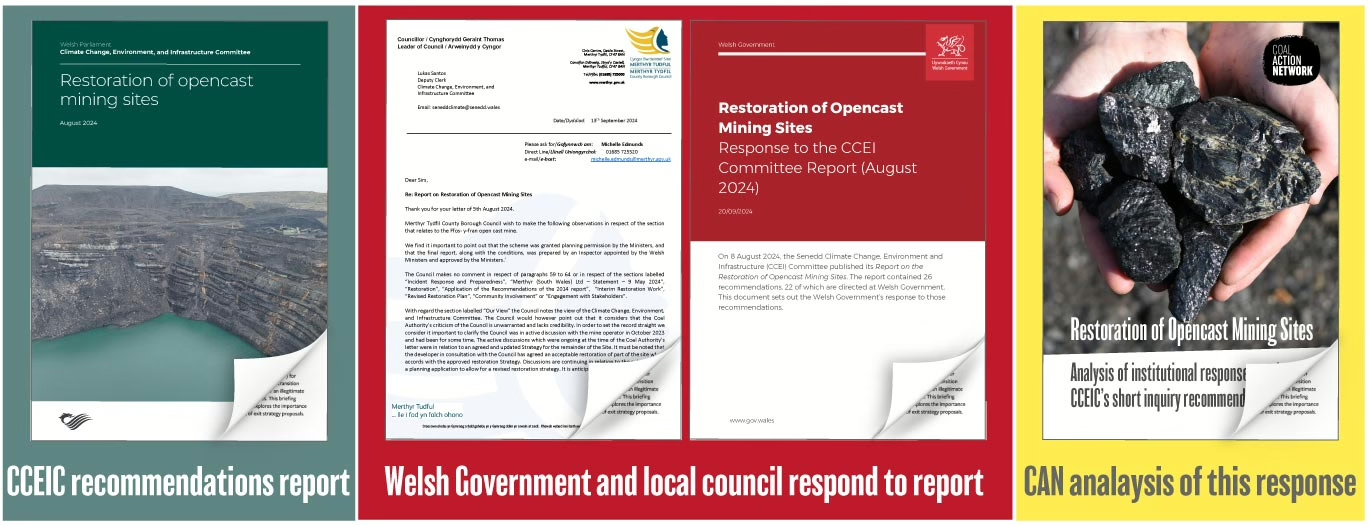
We worked with media outlet, Nation.Cymru, to ask where the main political parties in Wales stands on restoration issues ahead of the Welsh election on 07th May 2026. This is a key issue for many people, but particularly those who live near under-restored opencast coal mine sites…