BACK TO TOP

Aberpergwm coal mine extension debated in court

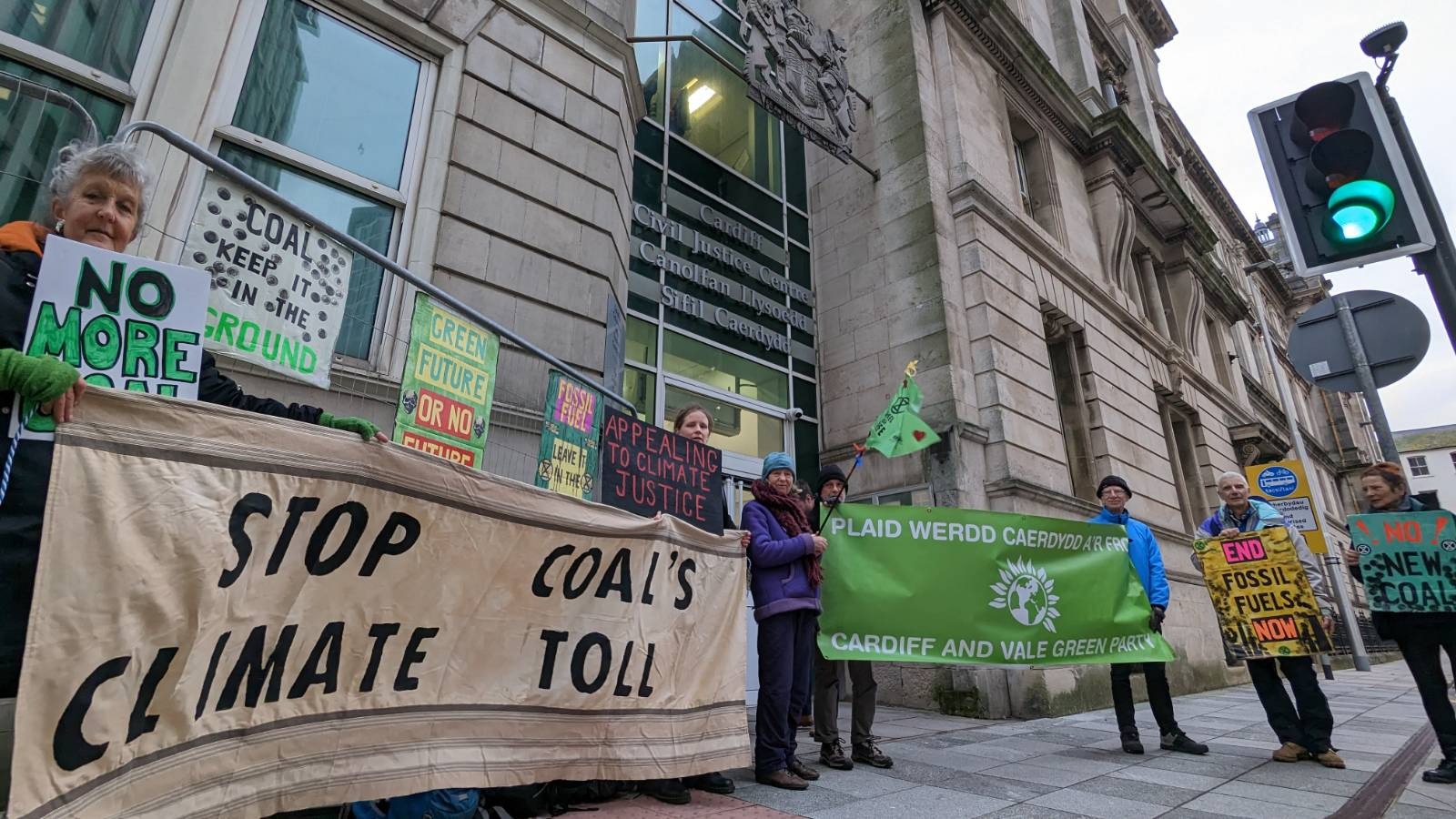
Today, 6th February 2024, Coal Action Network was back in court, this time appealing last year’s decision by the court that the Welsh Government couldn’t prevent an extension at Aberpergwm coal mine. Our legal team believes the Welsh Government can, and we believe it should, stop the Aberpergwm extension—keeping 42 million tonnes of coal underground. At stake in this case is an additional 1.17 million tonnes of methane and up to 120 million tonnes of CO2 would be released.

Barristers Estelle Dehon KC and Asitha Ranatunga (Cornerstone Barristers), supported by Matthew McFeeley (Richard Buxton Solicitors), argued that there is a difference between the authorisation for a coal mine and the licensing for one, particularly in the conditional form.

While the specific legal argument is complicated, the case is really a question of whether the Wales Act (2017) means the Welsh Government, rather than the UK Government’s Coal Authority, gets the final say on whether the Aberpergwm coal mine extension can go ahead.
A much debated section reads:

Aberpergwm deep coal mine supplies 70% of its coal to Port Talbot steelworks, which is expected to significantly reduce its coal demand as it decarbonises.

Welsh Government policy, while not without loopholes, does make a stand against the extraction of coal. Should the 3 appeal judges decide that Coal Action Network’s legal team is correct, the Welsh Government will need to decide whether to allow the extension to happen. A ruling is expected in the next 6—12 weeks.

Published 06. 02. 2024

Share now:

Subscribe
Notify of
guest

1 Comment
Oldest
Newest Most Voted
Inline Feedbacks
View all comments
Roger Geffen
Roger Geffen
2 years ago

Good on you for fighting this. Although I only have your account of the legal arguments to go on, they look convincing to me. Fingers crossed for a positive outcome!

Never miss an update! Sign up to our Newsletter

OTHER STORIES

Opencast vs deep coal mines

Deep coal mines have a long history in the UK dating back some 400 years. On the other hand, opencast coal mines only became common between 1940 and 60, becoming the dominant mining method in the UK as deep coal mining entered rapid decline. Opencast coal mining techniques…

Welsh parties commit to restoration ahead of elections

We worked with media outlet, Nation.Cymru, to ask where the main political parties in Wales stands on restoration issues ahead of the Welsh election on 07th May 2026. This is a key issue for many people, but particularly those who live near under-restored opencast coal mine sites…

Ben Hodge-McKenna on reopening Welsh coal mines

As part of our Politics Unspun series we are unpacking politicians’ public comments on coal to challenge any misleading or incorrect messages. Todays’ focus is on comments made in a BBC interview during the Senedd election campaign about coal mining in Wales. During the interview, Reform UK candidate in Afan Ogwr Rhondda, Ben Hodge-McKenna…

Our 2026 Wales manifesto

Coal Action Network is proud to present our 2026 manifesto for Wales. With the Senedd elections taking place in May this year, Wales stands at a decisive moment. For over a century, coal has shaped Welsh landscapes, communities, and politics. Today, Wales has the opportunity to shape something very different…

Lee Anderson on dirty, horrible, dangerous coal jobs

As part of our Politics Unspun series we are unpacking politicians’ public comments on coal to challenge any misleading or incorrect messages. Todays’ focus is on comments made during a Westminster Hall debate in December 2025 about the oil refining sector. During the debate, Lee Anderson MP made some statements about coal…

Take Action – End new English coal

The Government is reforming planning policy in England and thanks to thousands of our supporters asking for an end to coal extraction in the last consultation in 2024, they are now recommending that planners “should not identify new sites or extensions to existing sites for peat or coal extraction”…

Demand nature be restored to Ffos-y-fran opencast site

Merthyr (South Wales) Ltd mined for over a year illegally after planning permission for the Ffos-y-fran opencast coal mine ended in September 2022. During that year, it made record-breaking profits due to sanctions on Russia and other factors driving up the price of coal. But rather than using some of the profits from that ill-gotten coal…

2026 must be the year that new coal extraction will be banned

In November 2024, the new UK Government announced its intention to legislate a ban of new coal mining licences – which we welcomed. Over a year later, the legislation is yet to be introduced, and the Government is not planning to include all types of extraction…

Where our coal comes from

The UK steel and cement sectors (and to a lesser extent, bricks) are the largest users of coal following the closing down of the UK’s last coal-fired power station in September 2024. Check out our coal dashboard for our most recent coal stats including an industry break-down. We support the UK Government’s commitment to ban…

CONNECT WITH US

Share now: