Coal Roundup September 2020
Opencast coal extraction
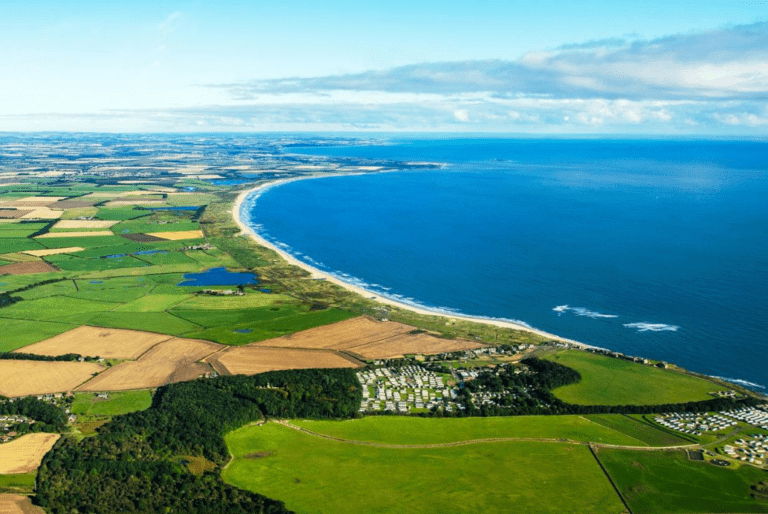
On the 8th September 2020, the Secretary of State for Housing Communities and Local Government rejected Banks Group's application to mine coal at Highthorn close to Druridge Bay, Northumberland. This is the second time a Secretary of State has rejected this application, following Northumberland County Council's 2016 approval of the opencast mine application.
This is a huge victory for Save Druridge the local campaign group against the mine. Local resident, Local resident Lynne Tate said, “The thought of this area being once again torn up, for a destructive opencast site over a period of seven years was unimaginable.”
Banks Group also had an application to extend their existing opencast mine in the Pont Valley, which it calls, Bradley rejected in July by Durham County Council.
There is currently only one opencast coal mine operating in England, none in Scotland and three in Wales.
The existing mines, by company are:
-
Celtic Energy: 1) East Pit, Neath Port Talbot and 2) Nant Helen, Powys (closure December 2021)
-
Merthyr (South Wales): Ffos-y-fran, Merthyr Tydfil
-
Hartington, Derbyshire.[1]
Banks Group proposed site:
Dewley Hill, on the outskirts of Newcastle, the planning hearing has been delayed by Covid protections.
Underground Mining
There are currently no underground mines operating of significant size
Proposed Underground Mines
West Cumbria Mining have amended their application for the land aspect of a new underground coking coal near Whitehaven in May 2020. If constructed this would produce coking coal for export for 50 years. Cumbria County Council has said a hearing date for a decision will be no earlier than October 2020.
New Age Explorations (an Australian company) are applying for licences for an underground coking coal mine at Lochinvar, on the border between England and Scotland. If constructed the company hopes to be producing coal until 2044.
Power Station Closures
Drax power station has announced that it will stop burning coal by March 2021 after almost five decades as one of western Europe’s most polluting power plants. Sadly the last two units are being replaced with another polluting fossil fuel, gas. Much of the wood which it burns comes from the clear-felling of biodiverse forests in Europe and the Southern USA which are home to many rare and endangered species.
EDF are reviewing the future of its West Burton power station, after the governmental support through the capacity market payments stop in September 2021. West Burton burns coal from Banks Group’s opencast mines in the North East of England, as well as imported coal.
Kilroot coal and oil power station in Northern Ireland is going to be converted to gas. No timeline for the end of coal use has been announced.
At Ratcliffe on Soar power station the owner Uniper plans to turn the power station into an incinerator for household waste and produce heat and electricity. There is no planning permission for this yet. United Kingdom withouth incineration network (UKWIN) highlight the problems with incinerators including air pollution and climate change, with a campaign against an incinerator at Ratcliffe.
The alternative fuels proposed at Ratcliffe, Kilroot and Drax would result in slightly lower greenhouse gas emissions and not require coal mining. However, these changes are not solutions to the climate or air pollution crisis and they involve building new infrastructure reliant on combustion leaving us dependent on fossil fuels or high levels of domestic waste.
Coal phase-out In early February the Prime Minister said that the coal phase-out could be brought forward from the end of 2025 to October 2024. This is not soon enough for communities at the front-lines of fossil fuel extraction.
Reduced demand for electricity due to the covid pandemic means that no electricity has been generated from coal since the 10th April 2020. 55 days and counting at the point of writing (4th June 2020).
Stockpiles
Total UK coal stock levels increased in 2018 to 5.3 million tonnes, broadly similar to the previous year. [2]
There is already more coal above ground than the UK government predicts will be consumed if coal were phased-out in 2025. We don’t need to extract or import any more. This is especially so, if the phase-out date is brought forward.
Want to help in the fight against coal?
-
Object to the Woodhouse Colliery application
-
Support Don’s crowdfunder to take Banks Group to court for wilfully destroying the habitat of a protected species
-
Follow the Coal Action Network on social media. Twitter and facebook for updates.
References
References
[1] The Coal Authority, Production and Manpower returns for three month period January to March 2020 and other sources.
[2] Department for Business, Industry and Industrial Strategy, Statistical Press Release. UK Energy Statistics, 2019 & Q4 2019 (26 March 2020) page 6
Queries and media contact: info @ coalaction . org .uk (without spaces)