UK coal mining and use
Overview
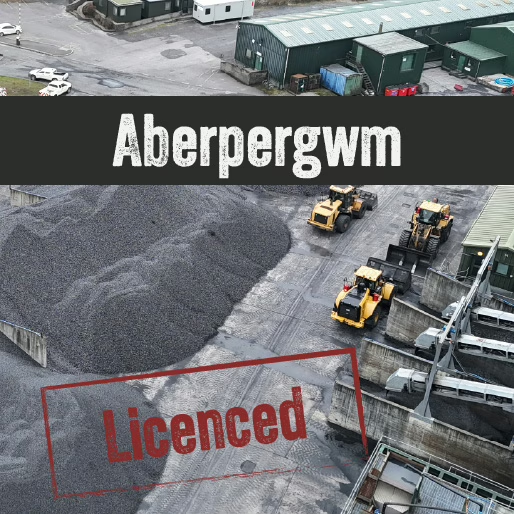
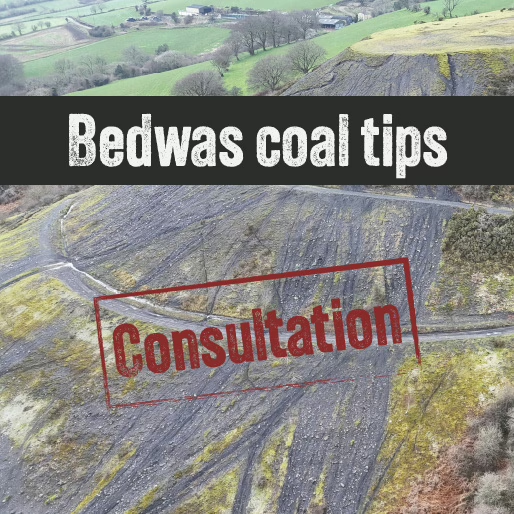
As of 2026, one large commercial coal mine within the UK is in operation – Aberpergwm, a deep coal mine in South Wales, employing around 250 staff and mining around 12,000 tonnes/month. Ayle Colliery is a smaller coal mine in Northumberland with just 7 staff, mining around 150 tonnes/month. Aberpergwm secured an extension in 2022 to extract up to an additional 42 million tonnes of coal until 2039. Ayle Colliery has permission to operate until 2069. 7 other ‘artisanal’ coal mines operate in the Forest of Dean, Gloucester, collectively producing a few tonnes of coal each month. There is also a live proposal to mine around 400,000 tonnes of coal from two coal tips in Bedwas.
2025 UK mining statistics
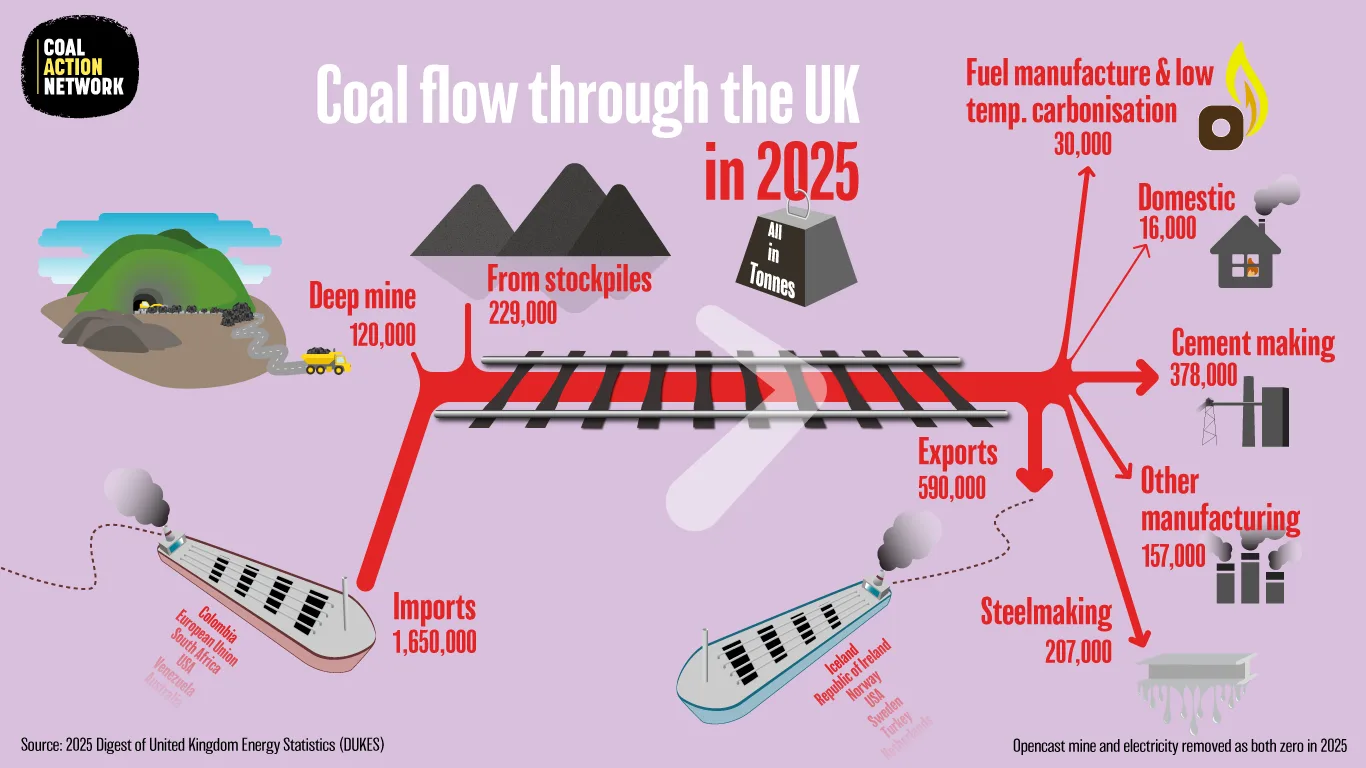
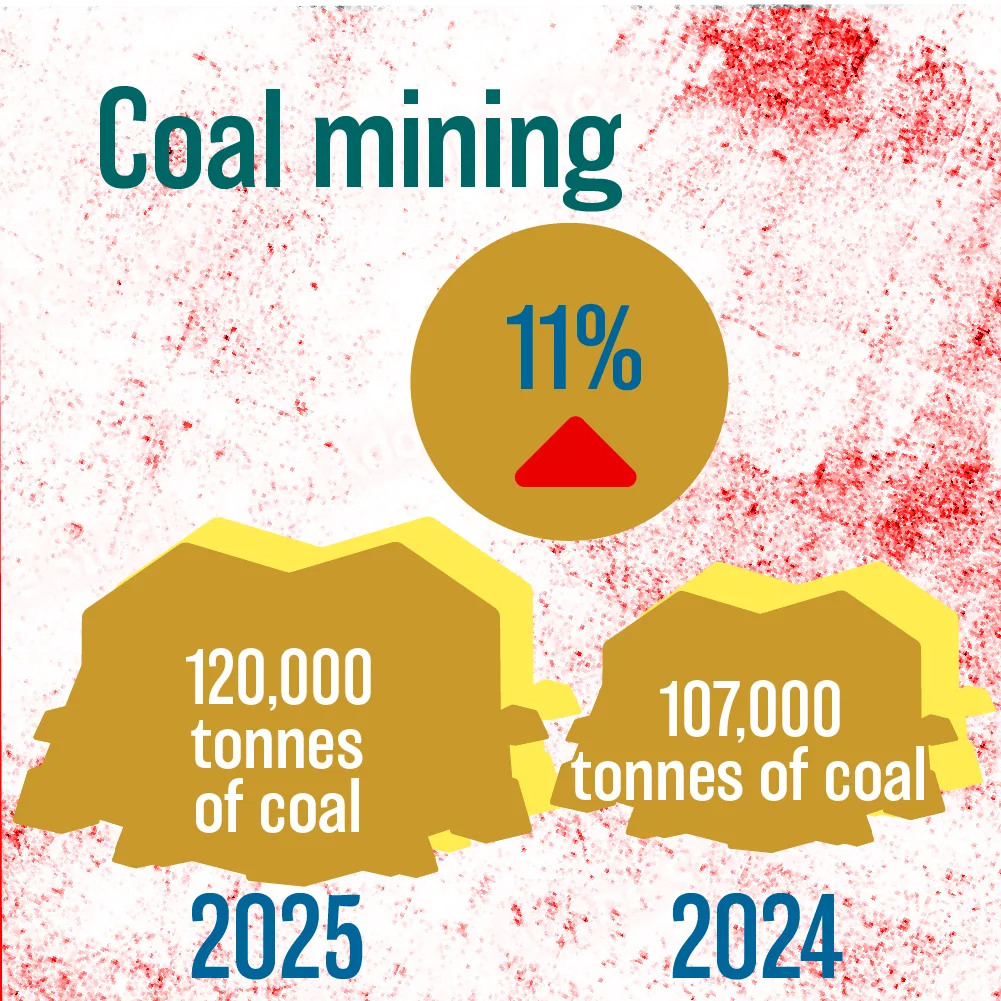
In 2025, the UK mined 120,000 tonnes of coal (mostly anthracite), 12% higher than the 107,000 tonnes in 2025, but still 99% lower than the quantity of coal mined just 10 years ago. At it’s height, the UK coal mining sector employed over 100,000 of workers, whereas by June 2026, the sector employed just 262 people (five fewer than in June 2025).
Exports
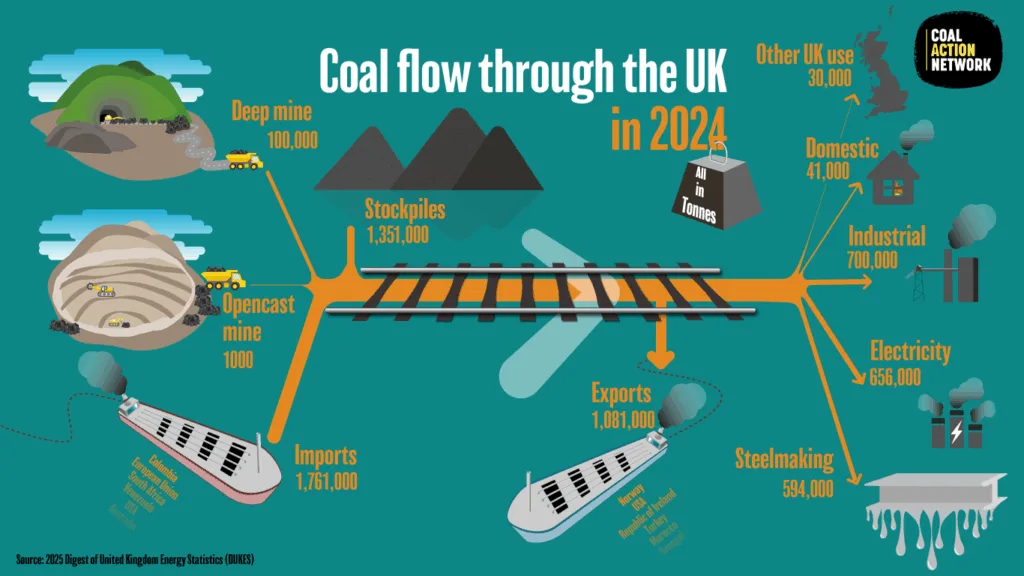
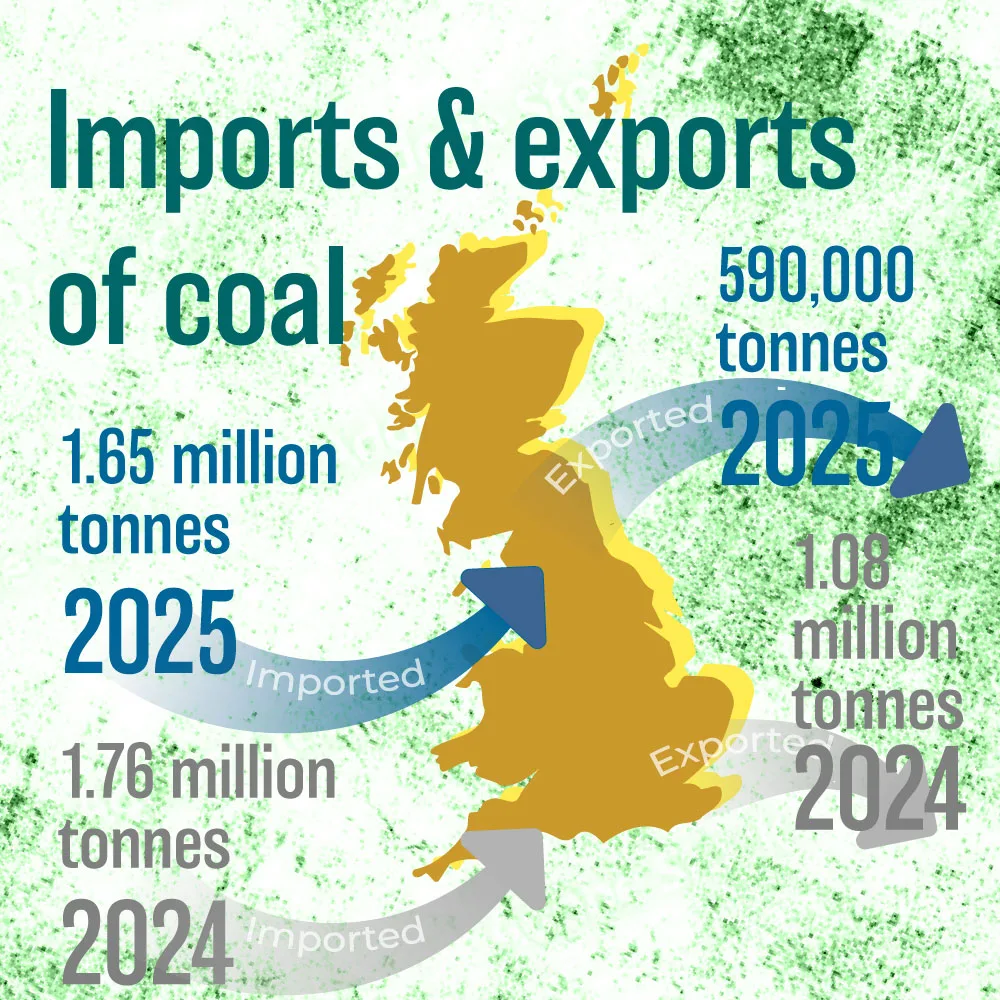
Not all of the coal mined in the UK, stays in the UK. In 2025, the UK exported 590,000 tonnes of coal (45% less than the 1.08 million tonnes exported in 2024). Most of this was selling off UK coal stockpiles, which were reduced to a historic low in 2025 at 200,000 tonnes.
A dangerous legacy
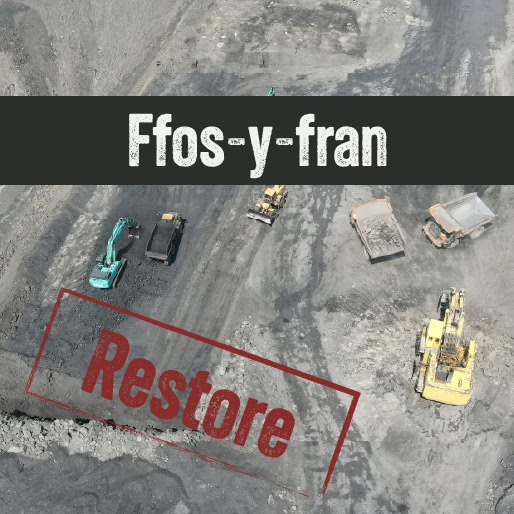
The extensive coal mining across the UK and particularly in South Wales has, however, cast a long shadow. Old coal mines still leak methane into our atmosphere, coal tips left behind pose a dangerous threat to nearby homes, and residents still live with the scars left behind by sprawling and largely unrestored opencast coal mining. Communities living in areas surrounding historic coal mining sites still suffer deprivation relative to the UK average. Coal Action Network actively campaigns to improve restoration of old coal mine sites near to communities.
Source: DUKES
UK coal mines


Coal use
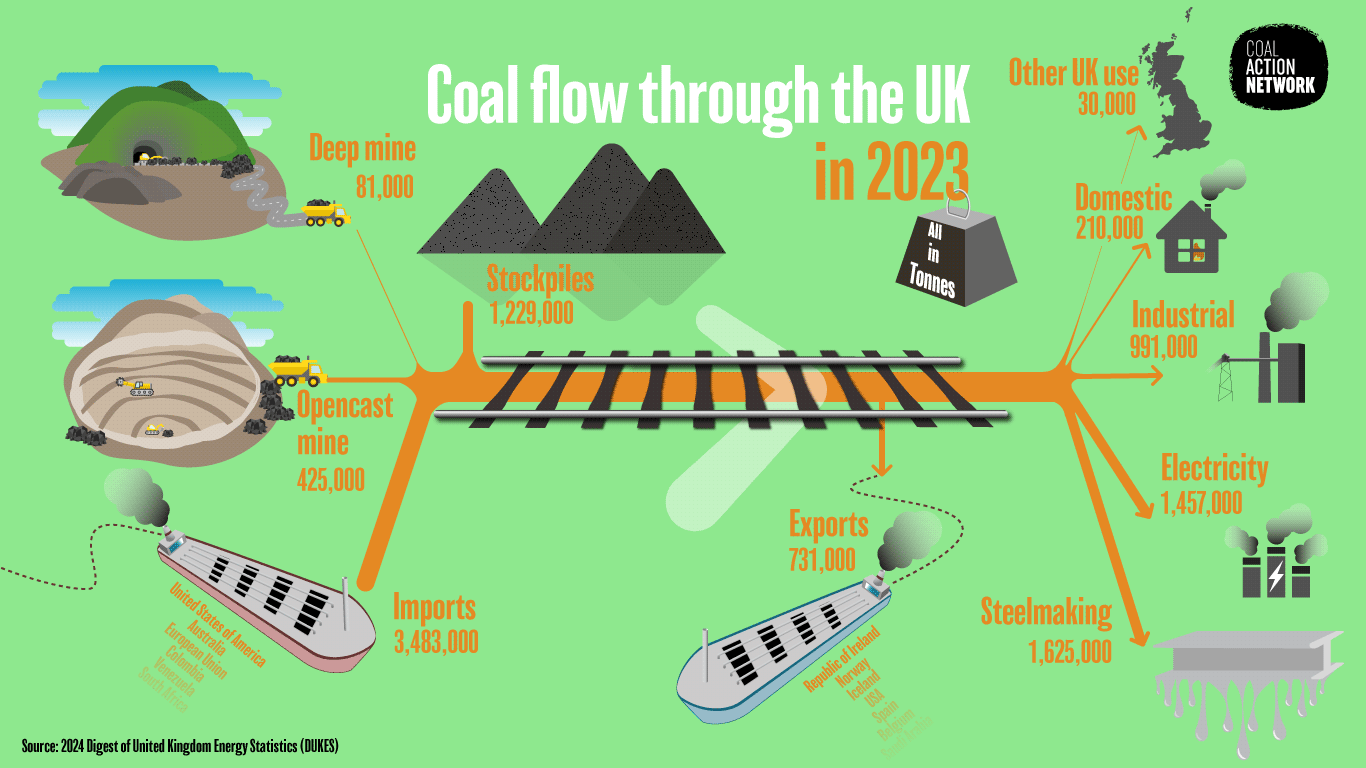
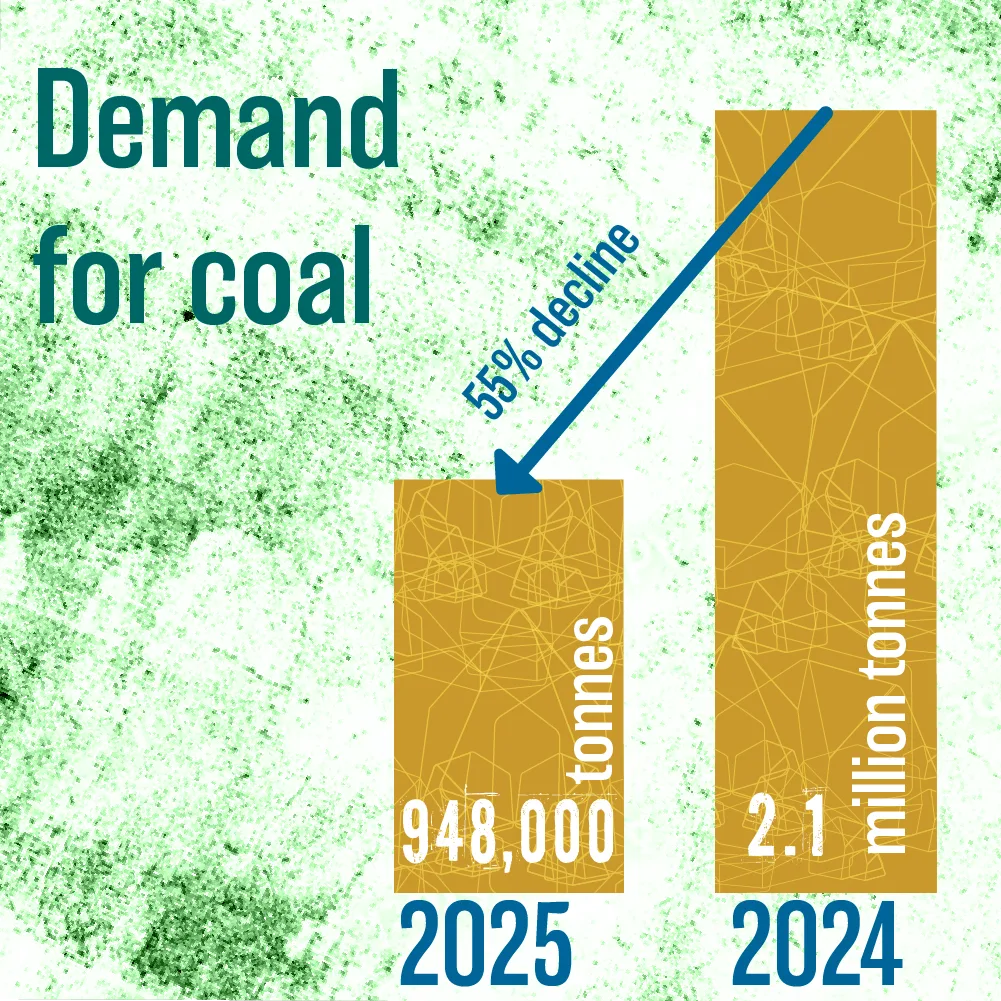
Demand for coal in 2025 was 948 thousand tonnes. This is a 56% reduction from 2.1 million tonnes in 2024 (4.7 million tonnes in 2023), and is mostly due to the closure of the UK’s last coal-fired power station (Ratcliffe-on-Soar), and the closure of Port Talbot TATA steelworks, leaving one remaining steelworks using coal-dependent blast furnaces. 2025 marks a 98% decrease in coal demand over just 3 years, from 6 million in 2022.
Heating homes
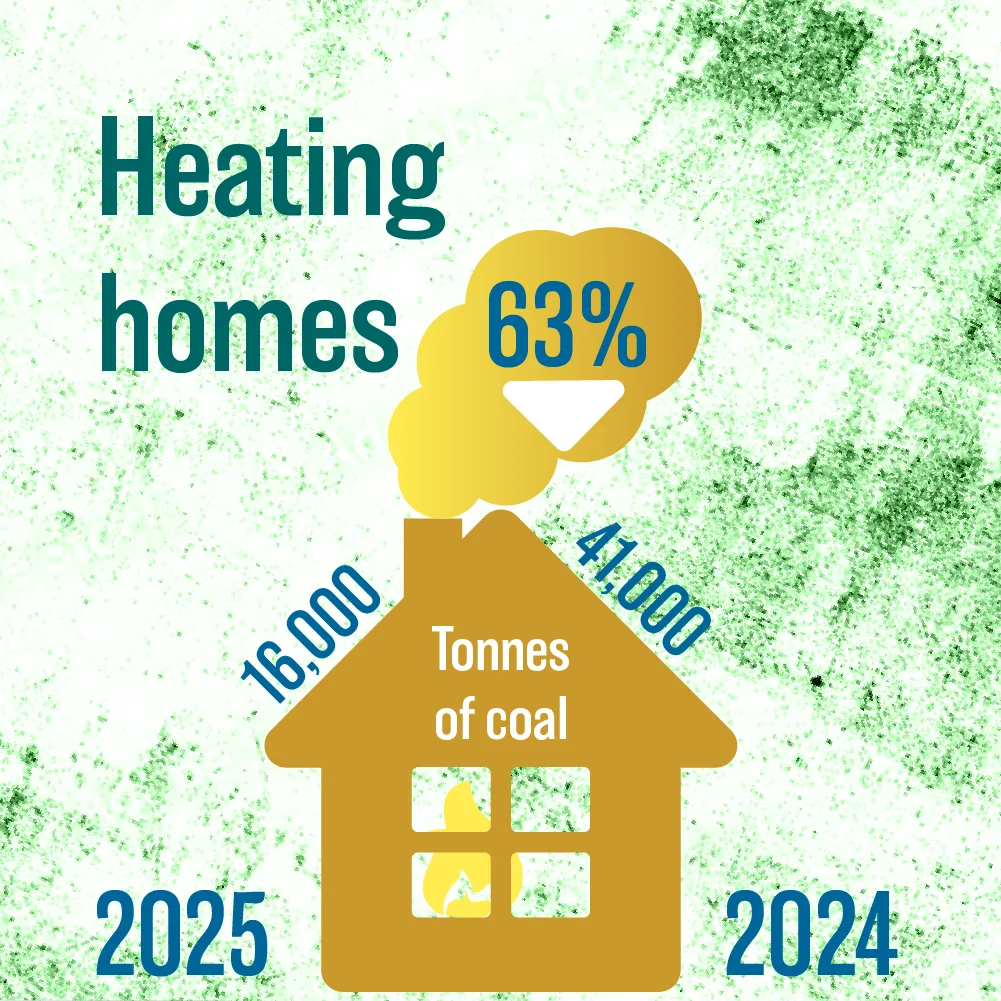
In 2025, heating homes in the UK used 16,000 tonnes of coal. The average home uses 1-2 tonnes of coal per year, so it is assumed that around 10,600 homes were heated with coal in 2024. This continues a trend of rapid decline, with 41,000 tonnes in 2024 and 210,000 tonnes in 2023; equivalent to around 160,000 homes, a 93% reduction in homes heated with coal between 2023 and 2025).
Coal for electricity
For the first year ever, coal accounted for 0% of electricity generation in the UK (0.9% in 2024, 1.8% in 2023, 2.7% in 2022, and 42-43% in 2012). This is due to the closure of Ratcliffe-on-Soar power station in October 2024, the UK’s last coal-fired power station.
Iron and steel coal use
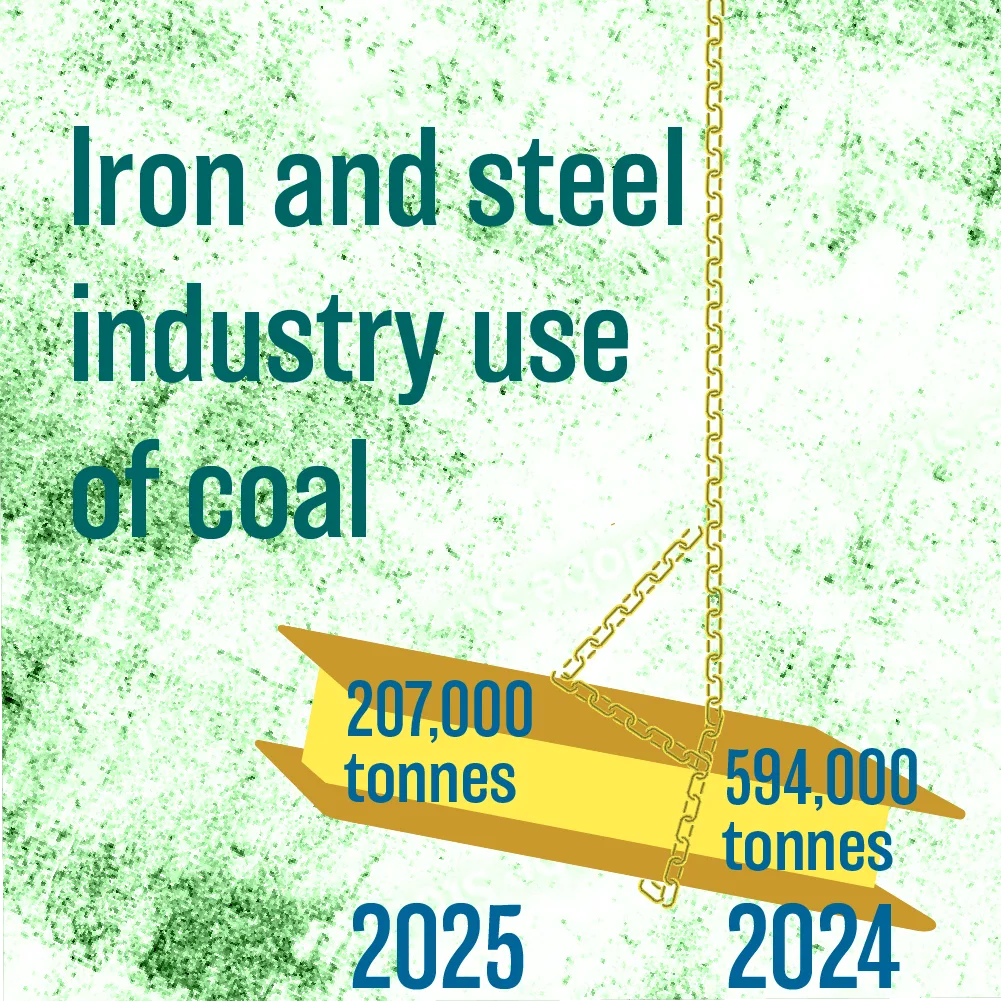
In 2025, the UK iron and steel industry used 207,000 tonnes of coal, down 65% on 2024 when demand was at 594,000 tonnes of coal – and just 4% of what was used by the iron and steel industry in 2015. The sharp decline is due to the closure and transformation of Port Talbot steelworks part-way through 2024. Despite this decline, coal for the iron and steel industry was 22% of total UK coal demand in 2025 – down 5% on 2024 (27%).
Cement coal use
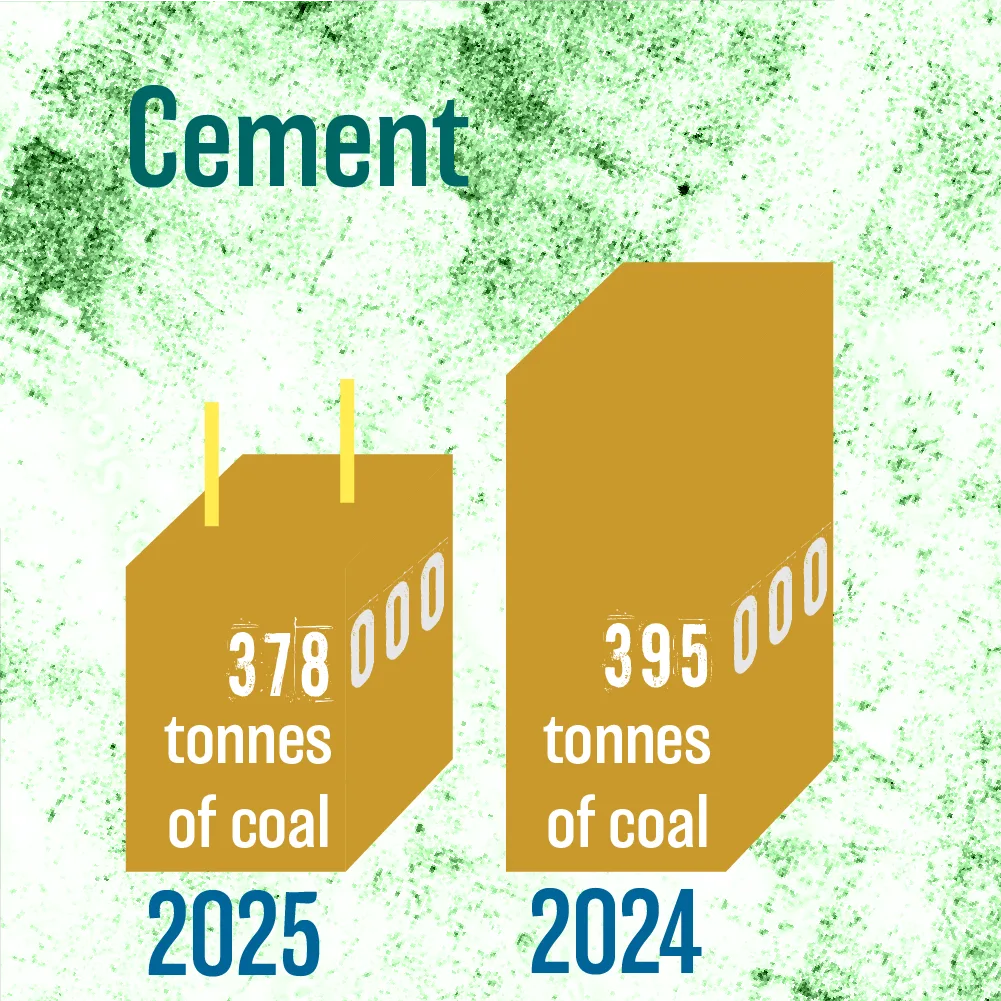
In 2025, 378,000 tonnes of coal (compared to 395,000 in 2024) were converted into ‘mineral products’ which is mainly cement manufacture, where coal is still the primary fuel burned to produce the 1450c heat required. This slight year-on-year decline may mean the cement sector is approaching a plateau in its coal dependence, unless action is taken to improve its decarbonisation trajectory.
Chemicals coal use
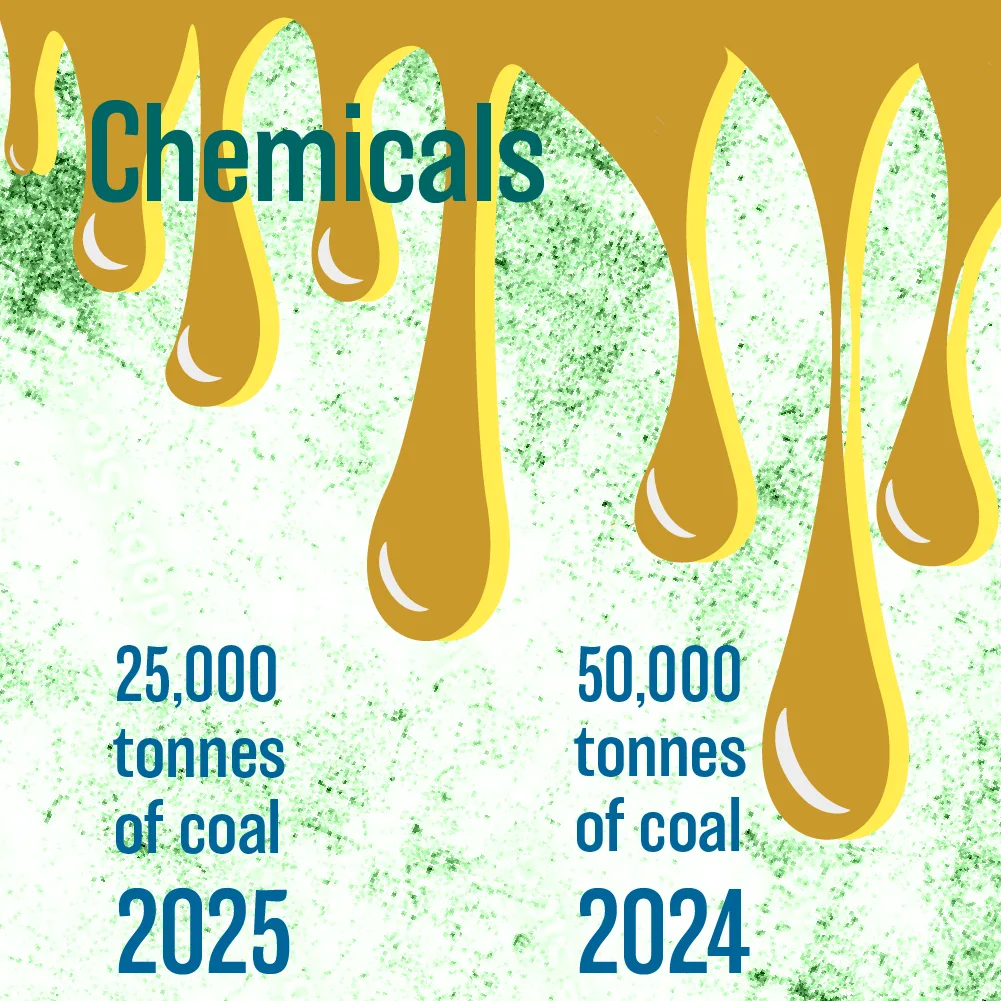
Unlike the cement sector, the chemical sector’s coal use has halved from 50,000 tonnes of coal in 2024 to just 25,000 tonnes in 2025.
Coal imports
In 2025, UK coal imports appeared to plateau at 1.65 million tonnes of coal, slightly down from 1.76 million tonnes in 2024. This follows a period of significant year-on-year declining imports since 2022 when the UK imported 6.35 million tonnes.
Coal exports
The UK exported 590,000 tonnes of coal, a 45% decline since 2024 (1.08 million tonnes). However, 2024 was an anomaly as Ratcliffe power station sold its surplus stocks following its closure in that year, producing an unusually high export volume. Yet, even compared to 2023 (731,000), 2025 marks a modest decline in exports of coal, and – similar to UK imports – may signify a plateauing.
Coal stockpiles
The amount of coal kept as stockpiles in warehouses, depots, and at coal ports around the UK reduced to just 200,000 tonnes in 2025 from 1.4 million tonnes in 2024. This was largely due to the closure of Ratcliffe power station and Port Talbot TATA steelworks. Stocks have been in general decline since 2014.
Source: DUKES