BACK TO TOP

Unleash mine water heat potential to warm Welsh communities

During their party conference, Plaid Cymru announced plans for their first hundred days of Government, should they win the Welsh election. Having now formed the Government, we hope to work with them and other Members of the Senedd to achieve some of those priorities. This is the first of three posts outlining opportunities which could help them to do that. Focussed on mine water heat; the incredible heat potential beneath the former coal fields of Wales must be unleashed to reduce energy poverty, shield Wales from fossil fuel price shocks, and meet climate commitments.

Background

Heating homes and commercial buildings uses roughly 50% of all the energy used in Wales. Around 45% of Welsh households are at risk of fuel poverty. About 50% of the population live within ex-coal mining areas, so there is huge demand for heating homes in former coalfield communities. Those communities are located close to abandoned deep coal mines, now filled with geothermally warmed water. This water can be used as a source of sustainable and secure heat which can be circulated through homes and businesses via heat networks. It has already been done in Gateshead, where the council-operated heat network supplies affordable, sustainable, and secure heating through over 5km of underground pipes to businesses, homes, and public buildings.

Our recommendations

The main thing stopping local authorities from using the heating potential under our feet is the cost and risk that drilling the borehole will miss the historical mine workings. Our consultation with local authorities showed that a dedicated fund from the Welsh Government to cover the expense and financial risk for mine water heat projects would encourage more local authorities to make use of this otherwise wasted local source of heating. A second problem identified by our consultation was the lack of specialist energy project development capacity within local authorities. Mine water heat networks require technical and commercial expertise that most councils do not have in‑house. By creating a national fund, paired with regional development capacity, the new Welsh Government could bring expertise closer to planning authorities, helping them to tap into this underground heating.

In the first hundred days, the Welsh Government should map out the biggest opportunities for rolling out mine water heat networks by combining several sources of information into one map with the following multiple layers:

  • The Mining Remediation Authority’s mine water heat potential map
  • Potential anchor customers (hospitals, GPs, schools, universities, leisure centres, government owned workplaces)
  • Local Authority owned land (ideal for building energy centres on)
  • A centralised map of brownfield sites (such as a similar map already created for England)

Stacking these into one map would highlight hotspots across Wales where mine water heat potential, ‘anchor customers’, and sites ideal for development, overlap – this would pinpoint the most suitable areas to begin work in.

How our recommendations help the Welsh Government meet its first 100 day priorities

These recommendations would help the new Government in the following areas of Plaid Cymru's first 100 days commitments:

Unleashing Wales’s economic potential:

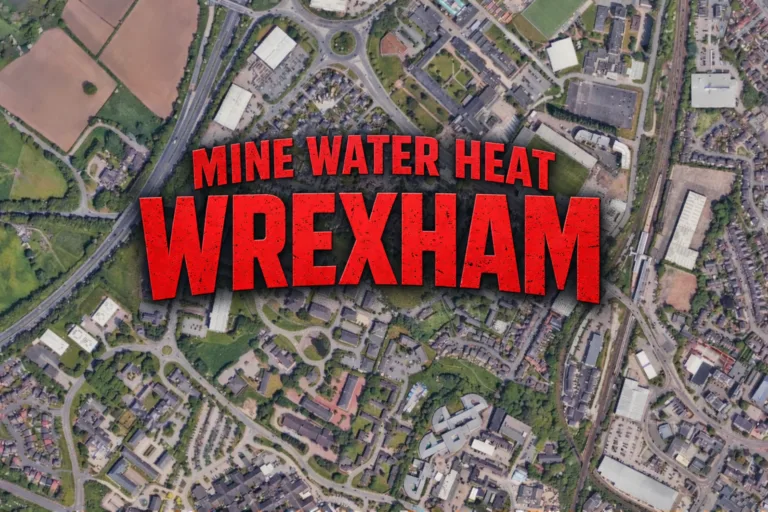
  • Energy, community, and bills – The National Energy Strategy should set clear targets for rolling out mine water heat networks. We should start with the three biggest hotspots: Wrexham, the Caerphilly/Rhondda Cynon Taf area, and the Llanelli to North Swansea corridor.
    • Mine water heat is perfect for community-owned projects. The government should use its planned boost for community energy to support these networks.
    • Trydan Gwyrdd Cymru is a new body which is meant to lower energy bills in the long run. Since mine water heat does exactly that, it should be a top priority for them.
  • Economy – The town centres taskforce should look into using these networks to provide cheap heat to local shops and offices. This could cut bills for businesses and keep more money circulating in the local community.
  • Skills and jobs – When the Government carries out its Wales-wide skills audit, it must include the jobs needed for the mine water heat industry. A future skills summit should bring together heat network specialists and identify the skilled trades needed. Geologists, drillers, plumbers, specialist welders, electricians and others should be able to be trained in Wales for the jobs needed in Wales.

Housing, local government and a community-focused planning system:

  • Warmer and more energy efficient homes The Warm Homes Programme should require all new builds to use mine water heat whenever it is practical. We should also look at upgrading existing homes near the big ‘anchor’ customers like hospitals and schools. This will cut CO2, improve efficiency, and help end fuel poverty.
  • Local government – As the government builds new partnerships with councils, it should prioritise mine water heat in the 11 local areas that have the most potential.
  • Housing for all – When Unnos looks for land for social housing, it should check for mine water heat potential. New social homes are the perfect place to use this efficient heating system.

Sustainability, resources and rural resilience:

  • Tackling the climate and nature emergencies – The updated Climate and Nature Action Plan needs to put mine water heat at its heart. This is a practical way to help Wales reach net zero by 2040.

Raising Educational Standards:

  • A schools estate that’s fit for purpose – When the government surveys school buildings, it should identify those that could switch to mine water heat. Schools are perfect for these networks because they need heat all day. Using a school as a hub can make heating cheaper for the school and the surrounding neighbourhood, if they can also be connected to the heat network.

A creative Wales, a well Wales:

  • Culture
    • Celebrating our history – The Government should work with the arts and heritage sectors to celebrate how Wales' coal mining past is powering its green future. Reusing mine water is the perfect way to link Welsh history with its cleaner tomorrow.
    • Intergenerational pride – There’s a real sense of pride in knowing that the grandchildren of miners will live in homes heated by the legacy of their grandfathers' work. This should be a central part of a modern Welsh culture.
Published on 13. 05. 2026