Coalition backing a coal mining ban in Wales
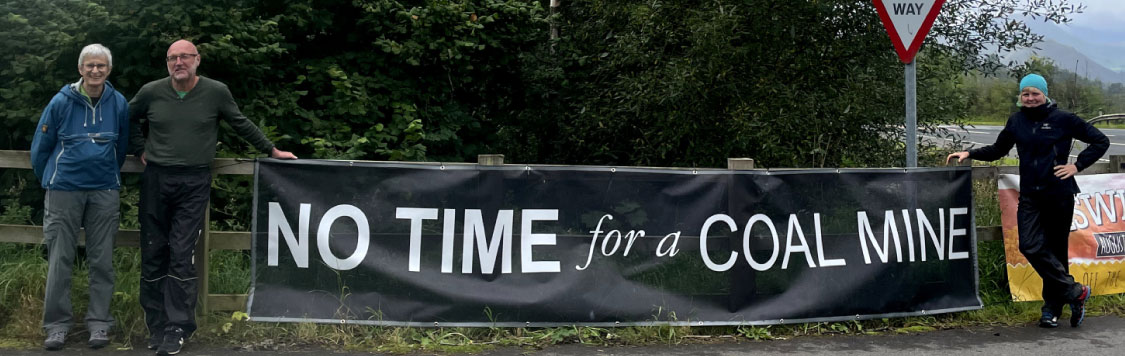
Over 30 Welsh NGOs and businesses call on Welsh Government to finally ban coal mining on Welsh soil.
Over 30 Welsh NGOs and businesses have signed a letter to Welsh Minister Julie James and Deputy Minister Lee Waters, demanding they draw a line in the sand and announce ban on any further coal mines on Welsh soil. The letter was sent to the Welsh Government on 11th October 2023.
Application to extend coal mine highlights existing policies causing confusion
The Welsh Government already has policies against new and extended coal mines but these are caveated and confusing. The renewed call for a clear coal mining ban comes less than a month after existing policies would have failed to stop a recent bid to reopen the shuttered Glan Lash opencast coal mine in Carmarthenshire. The coal mining company, Bryn Bach Coal Ltd, applied to double the size of the coal mine over six years. Controversially, Carmarthenshire County Council’s Planning Officer advised Councillors in the Officer’s Report, and at the Planning Hearing, that "Overall, it is considered that the proposals would largely meet the criteria of the coal policy" (p66). Ultimately, the application was rejected on the grounds of local ecological impacts—but it has exposed the weakness of existing policies, with the Planning Officer adding that it is “difficult to know for certain how to interpret the coal policy” (p66).

Call to follow Scotland’s coal mine ban
The open letter coincides with the first anniversary of Scotland’s announcement of its own de facto ban on coal mining, in October 2022. Daniel Therkelsen, campaigner at Coal Action Network says “The Welsh Government faces a choice—align itself with the backtracking and flip-flopping of the UK Government, or regain its international leadership position alongside Scotland, as a progressive country of confidence and stability for green industry to thrive.
Minister Julie James recognises resources being wasted
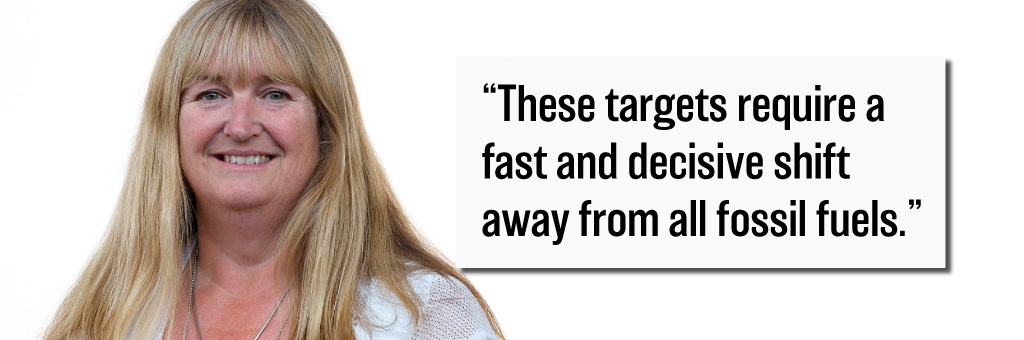
Welsh Minister for Climate Change, Julie James, wrote a letter to the UK Government in October 2021, lamenting the current policy situation, which “results in both the developer and the Coal Authority committing significant resources respectively to preparing and determining applications”. NGOs and businesses that signed the open letter to Ministers Julie James and Deputy Minister Lee Waters are calling for a clear coal ban that clears up the confusion Carmarthenshire Council identified and the caveats that creates uncertainty and potentially wasted resources for coal mining companies, such as Merthyr (South Wales) Ltd, which also applied for an extension in September last year but was conversely rejected due to the Welsh Government’s coal policies by Merthyr Tydfil County Borough Council.
Opinion
Daniel Therkelsen, Campaigner, Coal Action Network: “The Welsh Government has said their position is ‘clear’, that ‘they want to bring a managed end to the extraction and use of coal’—but their jigsaw of policies on coal is as clear as the coal dust that continues to plague communities living around mines in South Wales, ban new coal mines and extensions and be done with it. Nothing about a ban would prevent access by the Coal Authority to address safety issues.”.
Extra reading...
Overview and key facts on Glan Lash opencast coal mine extension application. The extension application was to extract a further 95,038 tonnes of coal (more than the original coal mine, licenced for just 92,500 tonnes).
Key Welsh Government policies relating to coal extraction include:
Planning Policy Wales (Edition 11) s.5.10.14 “Proposals for opencast, deep-mine development or colliery spoil disposal should not be permitted. Should, in wholly exceptional circumstances, proposals be put forward they would clearly need to demonstrate why they are needed in the context of climate change emissions reductions targets and for reasons of national energy security.”
Minerals Technical Advice Note 2: Coal “Government policies and planning guidance on the provision of coal have previously been set out in Mineral Planning Guidance Note 3 (MPG3) published in 1994 for England and Wales. MPG 3 (1994), apart from the Annexes, was cancelled by MPPW. This MTAN supersedes the 1994 Annexes, which are hereby cancelled… This coal MTAN sets out how impacts should be assessed and what mitigation measures should be adopted, and seeks to identify the environmental and social costs of coal operations so that they are properly met by the operator.”
Coal policy statement, 22 March 2021: “The opening of new coal mines or the extension of existing coaling operations in Wales would add to the global supply of coal, having a significant effect on Wales’ and the UK’s legally binding carbon budgets as well as international efforts to limit the impact of climate change. Therefore, Welsh Ministers do not intend to authorise new Coal Authority mining operation licences or variations to existing licences. Coal licences may be needed in wholly exceptional circumstances and each application will be decided on its own merits, but the presumption will always be against coal extraction.”
Published: 10.10.2023